The metaverse isn’t a single unified virtual world. It’s a growing set of interconnected platforms built on avatars, digital ownership, and persistent economies, with VR/AR spending alone projected to reach USD 77.2 billion by 2030. This guide breaks down the core components, the trends worth tracking, and where the real investment opportunities sit.
“While you gaze into the metaverse without really understanding what it is, the metaverse gazes back at you and gradually penetrates your life.”
(c) Unidentified digital avatar
The difference with the Nietzschean abyss in this case lies in the fact that we know more about our abyss, that is, our dark side, than about the metaverses.
What associations does the word metaverse evoke in your head? Some kaleidoscopes of virtual reality headsets, snippets of news about the renaming of Facebook to Meta, Epic Games with its Fortnite events (who knows what’s the matter?), and other incoherent info. Meanwhile, the metaverse continues to influence gaming, social platforms, and immersive technologies.

The opportunity to plunge into the virtual world with the help of VR technologies causes a general stir among those who have already managed to join this. Companies such as Epic Games and Meta continue investing heavily in immersive technologies and connected virtual experiences.
Friendly advice you didn’t ask for, but still 一 if you don’t want to hopelessly fall behind both the preferences of the players and the activities of more adventurous competitors, dive into the topic of the metaverses right now.
Here are the numbers to prove it.
Virtual and mixed reality technologies continue to expand beyond gaming. Grand View Research estimates that the global immersive virtual reality market will grow to USD 77.2 billion by 2030, reflecting broader adoption across entertainment, education, healthcare, manufacturing, and training.
Understanding the essence of this trend will help you begin to navigate the murky waters of the metaverse and choose the right strategy for working with it. So let’s talk in more detail about the concept and prospects of metaverse gaming, how it works, and what famous metaverse projects are already on the lips.
Briefly about the Metaverse
Although we are here more to immerse ourselves in the game component of the metaverse, a general definition does not hurt. The most interesting thing here is that the metaverse does not have an authoritative definition. But there are several frameworks from opinion leaders.

It is important to understand that the metaverse does not equal the virtual world. Today, many companies prefer terms such as persistent virtual worlds, immersive platforms, or spatial computing instead of metaverse. While the terminology has changed, the underlying technologies continue to develop in the same direction. The metaverse may consist of a large number of interconnected virtual worlds. But no virtual world is a metaverse.
Venture investor and metaverse ideologue Matthew Ball outlined the main features of the metaverse in 2021:
| Endless existence | It never resets, pauses, or ends. Time in the metaverse flows continuously, just as it does in the real world, it cannot be stopped. |
| Limitless audience | No limit on the number of concurrent users. Everyone can connect to the metaverse at any time and participate in its life on an equal footing with the rest. |
| Fully functioning economy | The ability to earn and spend different types of currencies, hold auctions, invest, etc. |
| Digital & physical | The metaverse unites the physical and digital worlds, open and closed platforms, private and public networks. |
| Interoperability | The ability to transfer data, items, assets, and content between digital worlds. For example, a user should be able to transfer cars from GTA Online to Need for Speed or gift them to a Facebook friend. |
| Many contributors | Metaverses should be filled with content and experiences created by its users: individuals, groups, or commercial enterprises. |
Since the concept continues to evolve, active discussions of its nature and characteristics continue to take place.
For example, should the metaverse be centralized or non-centralized? Centralization provides control of the metaverse by a single body. It knows the personal data of users and determines the comprehensive interaction with users and the use of services. But in fact, this contradicts the very essence of the metaverse.
Sam Hamilton, Creative Director at Decentraland Foundation, argues that the centralized metaverse is not a metaverse, it’s a video game and curated entertainment.

What Is Gaming in the Metaverse?
Gaming in the metaverse is a way for players to interact with each other in real time using digital avatars.
Actions in games of the metaverse are similar to actions in the real world: people communicate, play, earn, spend, and invest money, create their own content, organize events, gather in communities of interest, and so on. Metaverse gaming is a combination of:
- Social interaction
- Games-as-a-platform
- Mixed reality
- Crypto assets
- Interoperability
The goal of the metaverse is to provide users with an outstanding experience through total immersion in an alternative digital world. The user must understand that this is not an ordinary game, but a full-fledged universe with individual interaction between all elements.
Let’s talk about each element in a little more detail to better understand metaverse games.
Social Interaction
Unlike traditional VR experience, gaming in the metaverse is inextricably linked to ongoing social interaction. Any multiplayer game takes on new facets and dimensions due to the ability to attract your friends from the real world to the metaspace, develop communities of interest, exchange information, organize events, compete, and so on.
Games-As-A-Platform
The general idea behind this concept is that there are limitless possibilities for user-generated content. Users not only use the available features and services, but also create their own content, form their subspecies of games in the main game, and even organize their own gaming events.
Mixed Reality
Metaverse gaming seamlessly combines augmented and mixed reality to provide the user with a seamless and engaging experience. Different levels of reality, from augmented in a group chat and mixed in a board game to a full-fledged virtual reality, switch depending on the user’s actions and adapt to each specific case.
Crypto Assets
Metaverse gaming crypto assets are one of the vital elements of the game in the metaverse, as they are the foundation of a decentralized gaming economy. Using in-game tokens, players purchase and sell assets, hold auctions, and participate in various financial activities.
Interoperability
Asking how to play metaverse games, for better understanding, you can imagine a digital space where the boundaries between different games are blurred. Assets from one game can be transferred to another with full ownership due to NFT rules.
How to Start Playing Metaverse Games?
To join gaming in the metaverse, it is not necessary to have a virtual reality headset. Of course, it is a key component of immersiveness, but its absence will not prevent you from playing metaverse games. You need to have the following:
- Reliable and fast internet connection.
- PC, mobile device, or console.
- Depending on the platform, you may also need a blockchain wallet to access digital ownership features or token-based economies.
Metaverse vs Video Games
The notion that a metaverse vision has questioned traditional gaming is not correct. Conventional video games will continue to develop as usual, while the gaming metaverse has its own path.
We already know that the metaverse differs from the video game in its non-centralized nature. Also, based on the above characteristics of the metaverses, we can summarize the following features offered by the metaverse and missing from conventional video games:
- There is no limit on the number of concurrent participants.
- More activities: the ability to attend events and organize games inside the game, etc.
- The ability to earn money thanks to the built-in blockchain system.
- Sandbox mode: players can create their own assets, buildings, maps, and other content.
- The option to transfer in-game assets from one game environment to another.
Gaming Metaverses: Creation Features and Team Composition
How about creating your own metaverse? Sounds very big and pathetic, doesn’t it? And this is no wonder. Kevuru Games specialists note that the creation of the metaverse is a very complex process, which is fundamentally different from working on conventional software.
Virtual worlds are huge – millions of people can enter and interact at the same time. This leads to a colossal load on servers and requires specialists to master a non-standard technology stack.
We can distinguish the following features of working on metaverse projects:
- Providing the metaverse with content. It is necessary to organize support for a large number of 3D characters and related attributes of the game: objects, houses, environment, etc.
- Synchronizing objects and characters. This is important for faithful reproduction of the game world.
- Moderating of user-generated content. This results in operating costs for resource administration.
You can read more about creating metaverse-ready assets on our blog.
Due to such complexity, a highly qualified team of diverse specialists is required to create the metaverse, including 2D and 3D artists, character artists, concept artists, game designers, UI/UX specialists, sound designers, managers and marketers, DevOps specialists, etc.
There are about 20 developers in this list of professionals. Among them are:
| Unreal Engine specialists | Server high load programmers | Blockchain specialists |
| Unreal Engine has become one of the most widely used engines for building large-scale virtual worlds. | It is important for them to be able to operate servers at a high level and distribute loads between them. | The metaverse is closely connected with blockchain technologies, cryptocurrency, and NFT. |
The problem is that today there are not that many developers who have the necessary technology stack in their arsenal. The shortage of personnel leads to a rise in the cost of such projects and even brings them to the AAA level. But companies are still willing to invest in the metaverse.
In addition to significant financial costs, the development of a metaverse project also requires significant time resources. It will take a while for the development team to create the simplest cyberspace from scratch.

Metaverse Development: Kevuru Games Experience
Kevuru Games already had experience in developing the metaverse. The pioneer project was the so-called Fashion Metaverse, where users were supposed to be able to buy clothes and communicate with each other.
Another project that the Kevuru team was working on was the Nano Wars game. We performed a full-cycle game development, starting with the creation of the GDD and ending with the deployment of the DevOps infrastructure by specialists. Nano Wars is a game with NFT biological cells and NTF modules for them, which are used to create your own teams and battles with an opponent. On the platform, you can feel like a real mad scientist:
- conduct laboratory experiments and turn cells into new biodigital creatures;
- breed rare nanocells, unique mutated versions of your NFT tokens;
- sell them or trade them and earn Biometa tokens for winning battles.
The goal of the game is to form an ideal tribe, each cell of which is capable of gaining powerful skills and scarce attributes, and may even turn into a new variety.

As a studio with over a decade of experience in different game genres and art styles, we can say that metaverse game development and metaverse art outsourcing are a whole other level of creative challenge. It allows many original ideas to unfold, as there are very few limits when you invent a new world. We don’t have a page for 3D world-building services yet, but we are always happy to see clients with an ambition to create a metaverse (and in the meantime, you can take a look at our works in 3D game modeling).
Top 7 Metaverse Trends for the Next Few Years
Although it is still difficult to predict how fast the metaverse will develop and how accurate the forecasts are, some of its trends can already be identified.
1. AR and VR in Games
AR and VR devices and sound systems play an integral role in the virtual gaming industry. As the metaverse evolves, these technologies are seeing exponential growth, highlighting their value and relevance to today’s marketplace. At Kevuru Games, we’ve been working in VR game development for years, and hope that this trend will go on.
2. Metaverse Events and creator economies
Live events remain one of the strongest engagement drivers in metaverse-style platforms, but the focus has shifted from one-off virtual concerts to creator-driven ecosystems. Fortnite, Roblox, and similar platforms now host millions of player-created experiences alongside branded events, educational spaces, and social hubs. As these ecosystems grow, virtual goods, digital identities, and creator monetization continue to drive the expansion of the metaverse market, which Grand View Research projects to reach USD 936.6 billion by 2030.
3. AI-Powered Avatars
Avatar technology is moving beyond appearance alone. Companies like Meta, NVIDIA, and Ready Player Me are investing in AI-powered avatars capable of more natural conversations, facial expressions, voice interaction, and real-time animation. Instead of simply representing users visually, avatars are gradually becoming interactive digital identities that can communicate, assist, and collaborate across games, virtual worlds, and productivity platforms.
4. Spatial Tracking and Interaction
Modern headsets no longer rely only on basic controller input. Hand tracking, eye tracking, facial expression capture, and spatial mapping are becoming standard features of immersive experiences. These technologies allow users to interact with virtual environments more naturally while giving developers new ways to build gameplay, social interactions, accessibility features, and collaborative experiences. As mixed reality devices continue to evolve, spatial interaction is becoming a core component of virtual worlds rather than an optional enhancement.
5. Digital Twins
This technology creates a complete 3D virtual and spatially accurate model of any building or space. Businesses already use digital twins for manufacturing, architecture, logistics, healthcare, and urban planning. Consumers can use digital twin technology to virtually try on clothes, explore new stores before they open, and visualize home items before buying them.
6. Cloud computing
The immersive and versatile aspects of the metaverse will constantly require cloud computing to process, store, and analyze the data generated by the platforms. A metaverse platform will not succeed if it cannot provide a flawless user experience or if it is difficult to scale.
7. Data science
The metaverse will collect a huge amount of data, which it will extract and use almost instantly. While the metaverse is based on a distributed technology such as blockchain, it is necessary to ensure that the data received in one part of the metaverse is reflected in the user experience in another part. Consequently, studying the next generation of data engineering is becoming a key area of education in the world of the metaverse.
And what about NFT?
Although the hype around NFTs has cooled, they remain an important technology for digital ownership and virtual economies. Learn more in our related guides:
Dive Deeper:
✔ How to Make Your Own NFT: All You Should Know
✔ How Much Does It Cost to Make an NFT: From Pictures to Metaverses
✔ How to Create an NFT Marketplace: Key Points in Simple Words
The Most Popular Metaverse Gaming Companies
Several major players in the market quickly recognized the potential of the metaverse and invested enough money to be considered the first metaverse gaming companies.
And while conservative companies claim that the end of human civilization will come in the form of VR glasses and a mass exodus into a virtual dystopia that threatens reality, others see the metaverse as a new level of interaction.
Meta
Meta remains one of the largest investors in immersive technologies, although its strategy has evolved since the company rebranded from Facebook in 2021. Rather than positioning Horizon Worlds as the centerpiece of its vision, Meta now focuses on building a broader ecosystem around Meta Quest headsets, Horizon OS, and AI-powered social experiences.
Horizon OS is designed as the operating system for Meta’s mixed-reality devices, allowing developers to build immersive applications that combine gaming, productivity, entertainment, and social interaction.
Epic Games
Epic Games continues to expand Fortnite beyond a traditional game through Unreal Editor for Fortnite (UEFN) and the Creator Economy. Instead of building every experience internally, Epic now allows creators to publish original games and earn revenue directly inside the Fortnite ecosystem. This creator-first approach has become one of the clearest examples of how metaverse-style platforms evolve over time.
The Most Famous Metaverse Games
While still in its early stages of development, metaverse gaming is already attracting a large amount of investment from various gaming companies. Here are some of the pioneers in the field who have already achieved incredible success and their main gaming tokens.
Decentraland (MANA and LAND)
Decentraland is a decentralized virtual reality platform that is one of the first metaverse gaming players. It consists of land plots, the right to which is determined by the LAND token, and other content that can be bought in the MANA cryptocurrency based on the Ethereum blockchain.
In addition to trading in items and real estate, players can manage their personal space however they want: fill it with games, activities, and works of art that other users can interact with. In November 2021, the Government of Barbados signed an agreement to acquire a piece of land for an embassy in Decentraland. Thus, Barbados became the first state in the world with an embassy in the metaverse. While the initiative remained largely symbolic, it demonstrated how governments were beginning to explore virtual spaces as an extension of their digital presence and public services.
The Sandbox (SAND, ASSETS, and LAND)
The Sandbox is a multiplayer sandbox game where players are given the opportunity to create their own worlds with unique objects.
Sandbox is a genre of video games or programs where the main features are full or partial configuration: object management, terraforming, map creation, etc.
With a certain similarity to Minecraft, Sandbox invites players to create puzzles, mazes, buildings, maps, and other digital assets using free tools. It is even possible to make entire games with VoxEdit and Game Maker without programming knowledge. The created assets can be monetized as NFTs and sold for SAND tokens on The Sandbox Marketplace.
Unlike Minecraft, Sandbox has a well-implemented blockchain and merchandise market where players buy and sell their creations. In addition to the SAND token, the platform has the ASSETS token, representing user-created in-game assets, and the LAND token, which represents digital real estate.
Fortnite
Fortnite used to be just a battle royale game. Today, it is difficult to describe it that simply. Alongside competitive matches, players attend concerts, explore branded worlds, play community-created experiences, and spend time in social hubs without ever leaving the platform. When we were working on concept art for Fortnite some years ago, we weren’t thinking of it as a metaverse at all.
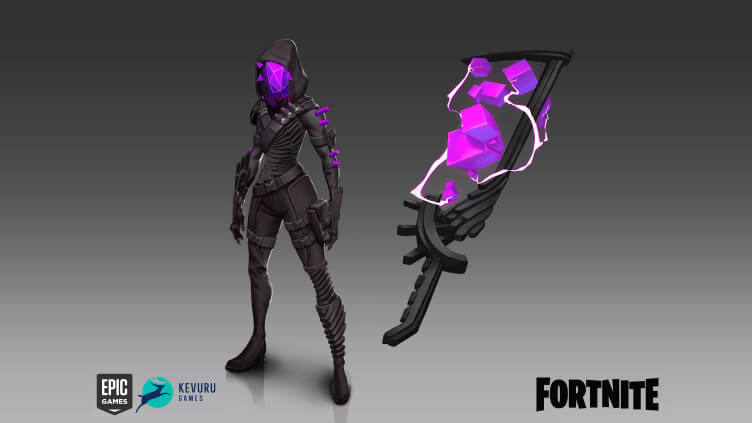
Unreal Editor for Fortnite (UEFN) was an important step in this direction. Community creators gained the same engine that powers Fortnite itself, allowing them to publish original experiences and earn through the Creator Economy. Today, much of Fortnite’s growth comes not only from Epic’s own content but also from the work of independent creators.
Roblox
Roblox reached the same destination from the opposite direction. From the beginning, it wasn’t built around one game. It was built around giving players the tools to create their own. Today, millions of experiences coexist inside the platform, while avatars, friends, inventories, and purchases remain with users wherever they go.
That persistence is what makes Roblox so important when talking about the metaverse. Players aren’t simply launching separate games — they’re moving through different spaces while keeping the same digital identity. Few platforms demonstrate that idea as clearly.
VRChat
If Fortnite is about events and Roblox is about creation, VRChat is about people. Most users don’t even log in with a specific objective. They meet friends, attend community events, explore worlds created by other users, or simply spend time talking. Avatars become far more than character models – they become personal identities that many users continue developing for years.
The platform also shows why avatars matter so much. Once voice, gestures, and full-body tracking are added, people stop recognizing each other by usernames alone. They recognize movement, appearance, and behavior, making digital identity feel much closer to real social interaction.
[cta_article]
The Metaverse in a Few Months: A Special Framework
The number of requests for the development of metaverses has increased. But not every company is ready to wait years for the release of a ready-made solution. Therefore, Kevuru Games CTO and his team are already working on the creation of the Metaverse Framework, on the basis of which it will be possible to create a digital space:
- Much faster. If the development of the metaverse from scratch takes long time, then the template will allow you to get the finished product in a few months. Thus, you will be able to see the result of your investment much faster.
- With minimal risk. When you already have the basis of the product, it is enough to add the necessary content, and the metaverse is ready to use. Everything happens predictably, and possible risks are foreseen in advance and leveled in time.
Speed is the very secret sauce of successful investments that we’ve promised in the title.
Backed by a guarantee of high speed and low risks, you can be sure that your investment will definitely pay off in the foreseeable future. And with the metaverse market’s projected revenue over the coming years, the ROI is likely to blow your mind.
Final Thoughts
Even though metaverse gaming is only at the beginning of its journey, it is a huge field for experimentation and has every prospect of becoming a revolution in the use of technology for a variety of purposes. While circumstances have contributed to the mass transition of people around the world to remote work, the metaverses are able to partially restore the desired interaction with people and revive traditional ways of remote communication.
In order not to miss the opportunities offered by the metaverses, think about incorporating them into your business strategy now. We perfectly understand metaverse games and can provide you with comprehensive advice regarding the creation of your promising metaverse project. You will get a full preview of the key features of your future gaming metaverse, its economy, capabilities, and distinctive characteristics.
Although the word metaverse is no longer used as aggressively as it was in 2022, the technologies behind it continue to evolve. Persistent virtual worlds, creator economies, mixed reality, AI-powered avatars, and digital ownership have become part of mainstream game development rather than separate experiments. The discussion has shifted from hype to practical implementation. For the gaming industry, it means that the metaverse is now a less risky and more reliable industry, and still worth jumping into.