
Most platforms let players customize their avatar, but far fewer give that avatar a real identity. Customization means swapping clothes or proportions; identity means the avatar stays recognizable across sessions and environments, and that consistency is what actually builds a player’s emotional connection to their character.
Clothes and appearance are superficial, but throughout the history of humankind, they have been strongly tied to our inner depths – our identity. In the digital world, these superficial things are even easier to change, but the tie remains as strong as ever.
In metaverse-style games, the details of the appearance of one’s avatar represent the player. In times of simple looks, the online world allows people to try on those complex visual identities without spending lots of time actually creating them. And those images become part of their identities as much as a look a person spends 3 hours daily putting on in real life.
People love having unique elements on their avatars, and often are willing to pay for them. Sometimes, pay a lot. According to Grand View Research, the global digital avatar market is projected to reach USD 270.6 billion by 2030, driven by increasing adoption across gaming, virtual worlds, social platforms, e-commerce, and enterprise applications.
The reason for this sheer market size is one: people don’t just customize avatars, they often build long-term digital identities around them. So how did people become so emotionally attached to avatars? How did it become tied to a player’s identity? And how can game designers use 3D avatars to increase their games’ engagement and profits? We’ll get to that later, and now, let’s start from the roots.
Where do 3D avatars come from?
The world avatar itself is ancient. In Sanskrit, the word avatāra means “descent.” It was used to describe a deity taking physical form and descending into the human world.
In a metaverse, where a player is a “god” ruling a virtual world, their representation in the game world is called an avatar. In the 2010s, when games like Minecraft and Roblox gave players lots of god-like creation freedom, that level of freedom in creating their in-game personas marked a shift from characters to avatars. This is not to say that characters are obsolete – they exist in parallel.
What is the difference between 3D avatars and characters?
It may seem that the word 3D avatar in gaming is just a fancy way of naming a detailed and customized character, but these terms are not interchangeable.
A character is part of the game’s design. It has a defined role and personality, and even when customization is allowed, it stays within boundaries set by the developers.
Take Hogwarts Legacy as an example. If you’ve spent some time with it, you’ve probably noticed it doesn’t follow the original book storyline. You’re not playing as Harry, or really anyone predefined.
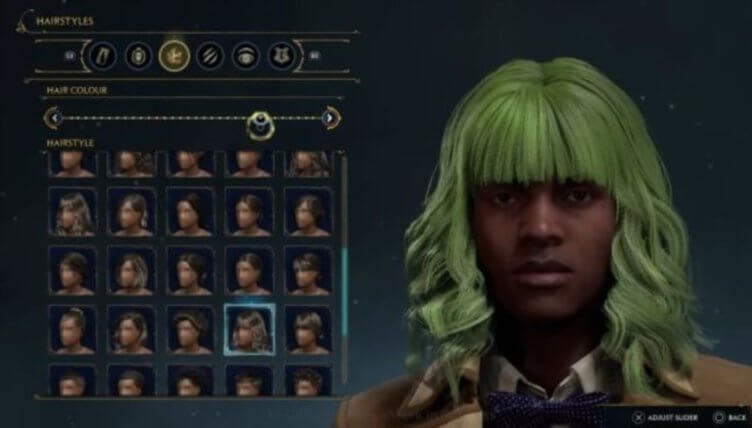
Instead, the game lets you shape the character yourself – appearance, name, small details like that. It creates a stronger sense of ownership. It’s easier to project yourself into the role when the character at least looks and feels closer to something you chose.
But that freedom only goes so far. You can’t just decide to play as a robot with a duck’s head – even if, technically, there’s nothing stopping that idea in your head. The game still operates within a defined set of rules. Same with the world itself. It might feel open at first, but the character is always moving inside boundaries set by the designers, following one of several prebuilt narrative paths rather than doing literally anything.
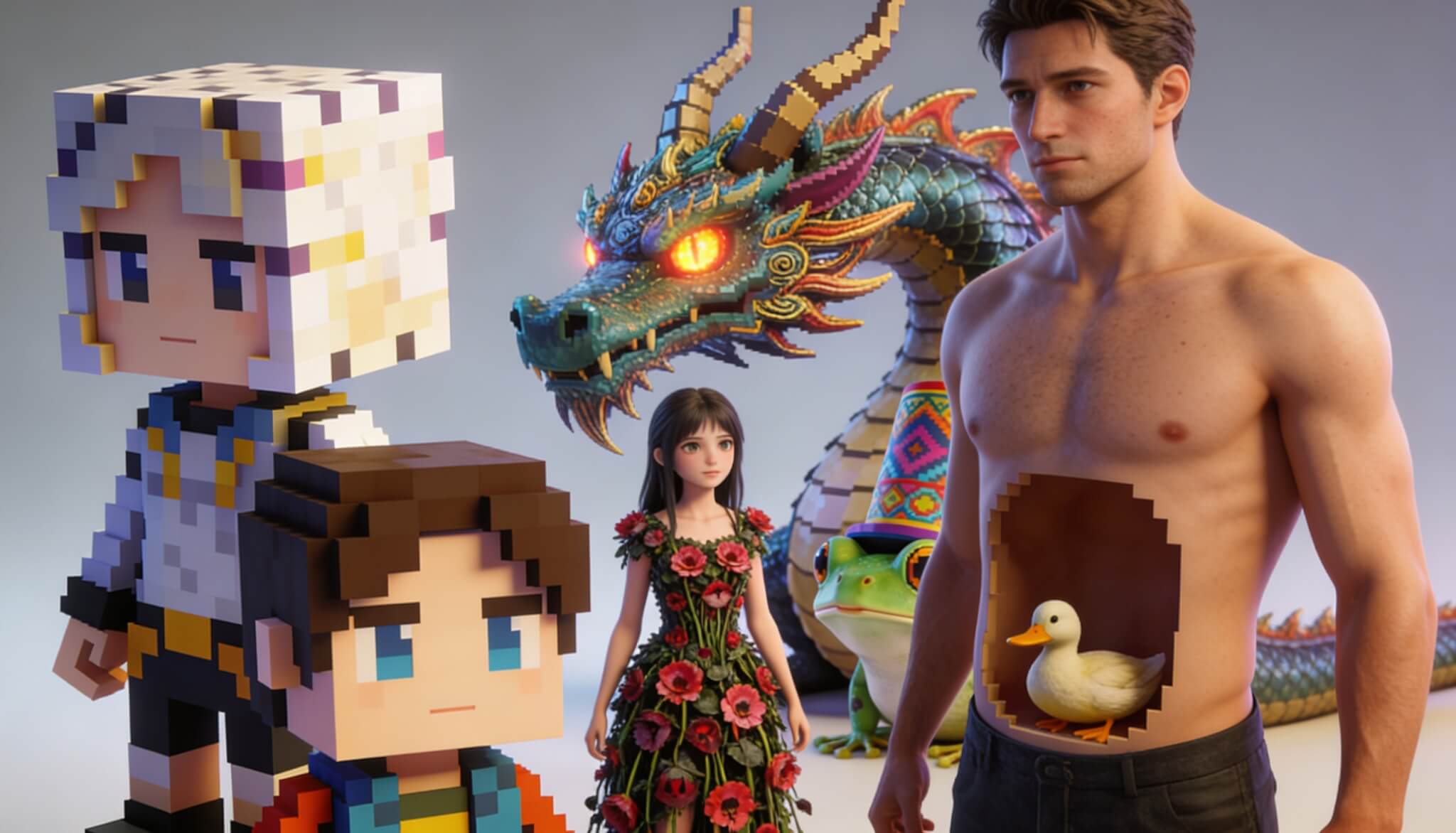
An avatar is tied to the player instead. It doesn’t have its own narrative role, it exists as a representation of the person using it. That’s why the limits of expression are very few for avatars. Here, you can easily be a robot with a duck’s head, wearing a swimsuit made of M&M’s, or a costume made of Microsoft’s Paint interface.
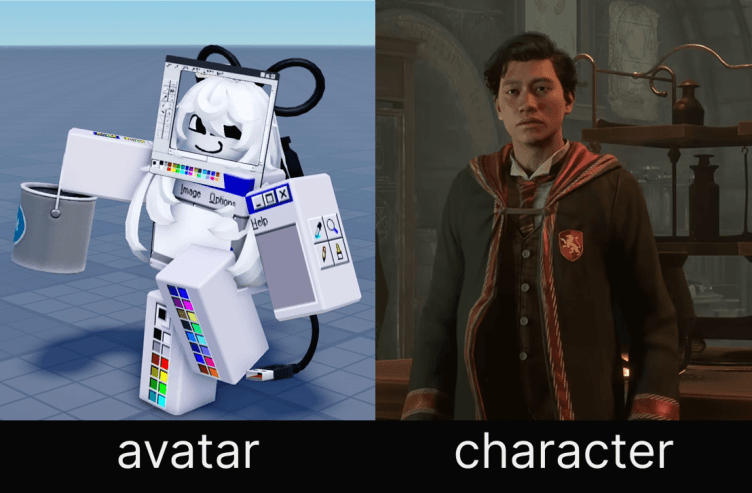
The purpose of an avatar is to represent a player, and that’s why the most important thing is to give people as much freedom as possible. The attractiveness of the metaverse is the possibility of creating identities that can hardly exist in the real world. When players know that they can express themselves with almost no limits, they have a deeper connection with the virtual world.
Why This Difference Matters
As games move toward more social and persistent environments, this distinction becomes more important. A character can be replaced or reset without much consequence. An avatar cannot. It accumulates meaning over time through appearance, behavior, and interaction.
This is why systems built around avatars need to handle consistency across sessions, stability across platforms, and flexibility without losing identity. It poses some challenges for developers, which we will discuss later.
Why 3D Avatars Are the Most Important Thing in A Metaverse
3D avatars existed long before the metaverse became a buzzword. In Second Life, one of the earliest “proto-metaverse” platforms, players could customize their avatar in detail, either by creating their own assets or buying items through the in-game marketplace.
Released in 2003, Second Life is still active, and its loyal users haven’t moved to other platforms, even though Second Life is obviously less technologically exciting than other modern platforms. People remain loyal to the game because they are highly connected to their avatars, as well as other avatars present in the game. They build social connections, develop their digital persona, abandoning which feels like losing a part of themselves.
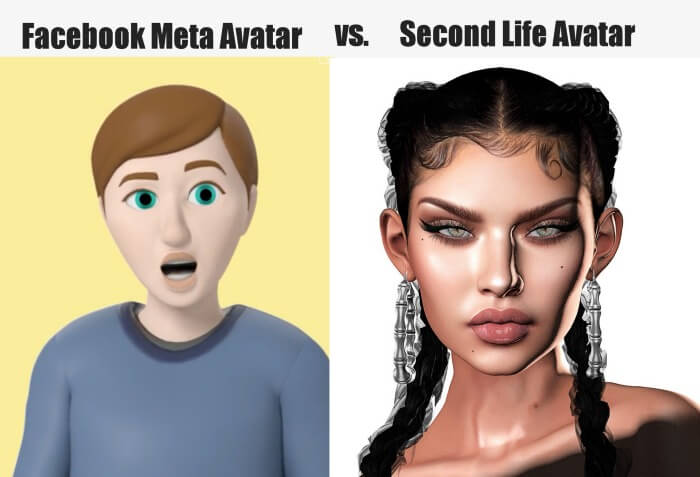
This is why avatars are a cornerstone of every metaverse-like game. However, simply creating endless possibilities for customization does not guarantee that special connection with the game that players develop when it becomes intertwined with their identity. Let’s dissect the aspects of 3D avatars that every game designer needs to consider when working on a metaverse-like project.
Customization vs Identity
Most platforms offer customization. Fewer actually support identity.
Customization is about options – changing clothes, accessories, or proportions. Identity is about consistency. It’s the ability to recognize an avatar across sessions, environments, and interactions.
On Roblox, this is largely driven by user-generated content. According to Roblox’s public reports, the platform hosts millions of creator-made assets, forming a large-scale avatar economy where players build their own representations over time.
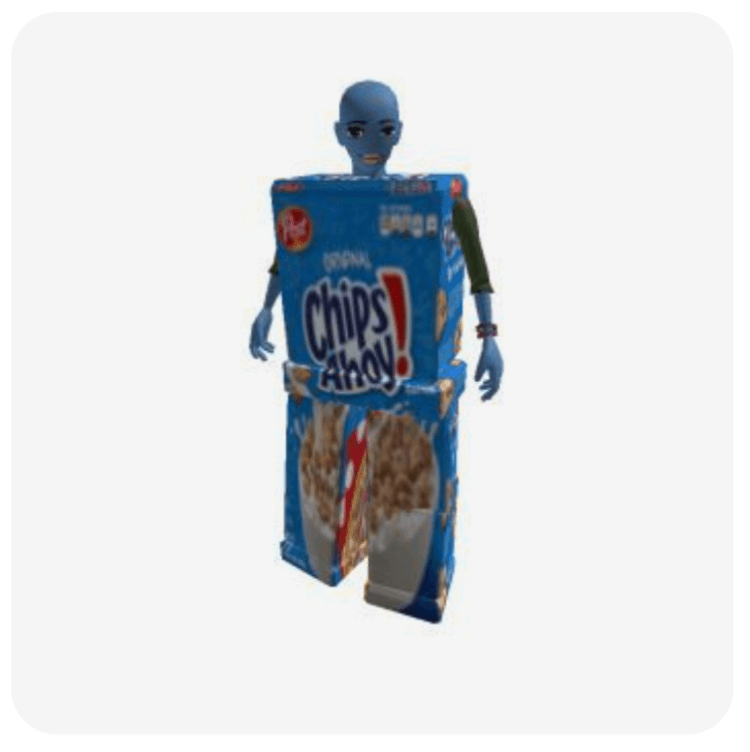
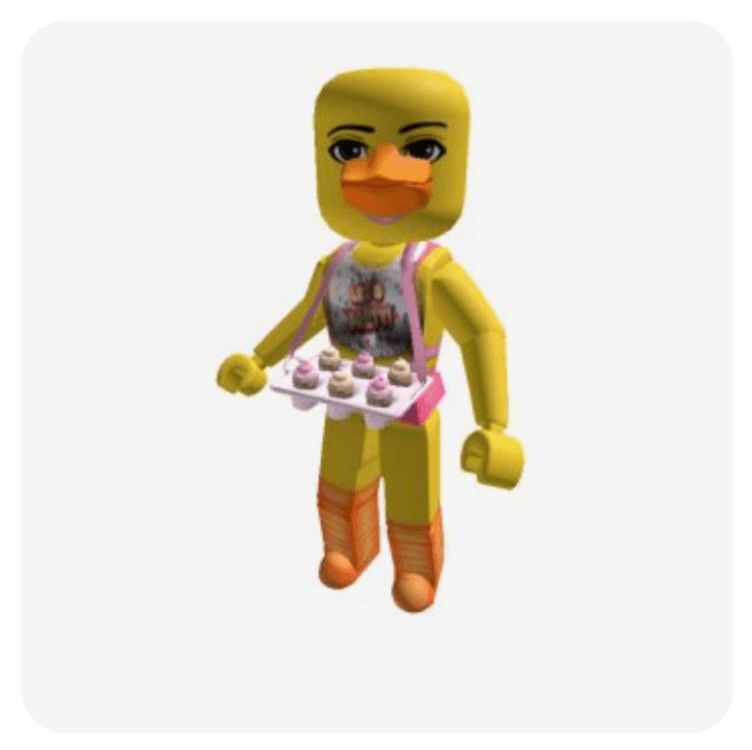
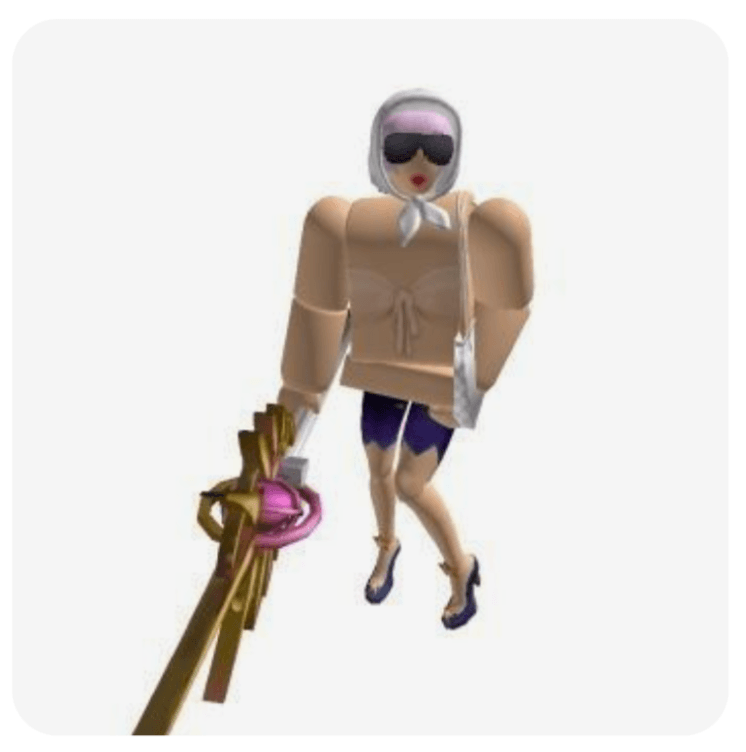
But scale alone doesn’t create identity. Inconsistent visuals, mismatched assets, or unstable appearance across contexts can break recognition. What matters is how these elements hold together.
That’s why certain aspects become more important than raw variety:
- silhouette and proportions
- facial structure
- material consistency
- recognizable combinations of elements
Without that coherence, customization becomes noise rather than identity.
Where Skins Fit into Avatar Systems
Most avatar systems separate structure from appearance, and this is where skins come in. A skin changes how an avatar looks, but not how it behaves. The underlying system – proportions, animations, interaction – stays the same, while the visual layer can vary.
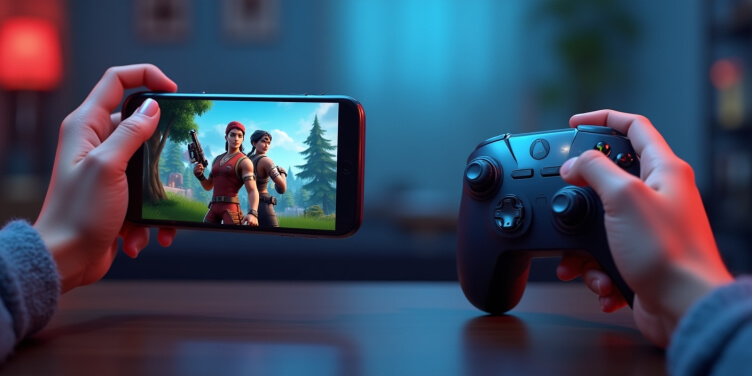
You can see this clearly in Fortnite. On the surface, skins can look completely unrelated, but they all run on the same underlying setup. However different the character appears, movement, hitboxes, and interactions stay the same.
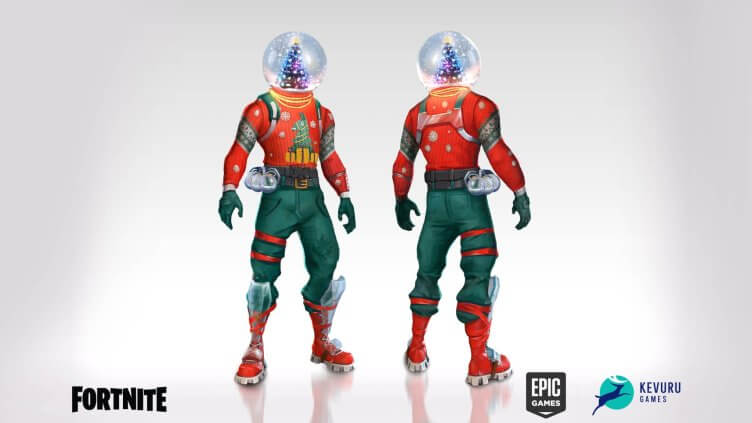
This separation is intentional. It allows a high level of visual variety without affecting gameplay or breaking animation systems.
At the same time, skins play a big role in identity. Even if the structure stays the same, players are often recognized by their visual choices. Over time, a combination of skins, colors, and accessories becomes associated with a specific player.
In more flexible systems, like VRChat, this boundary becomes less strict. What looks like a “skin” can actually change proportions or animation behavior, which makes it part of the avatar itself.
The Role of 3D in Digital Identity
Once avatars moved into 3D, the way people perceive them changed quite a bit. In 2D, representation is mostly static. You recognize someone by an image, maybe a username. In 3D spaces, it’s not just about how something looks, but where it is, how it moves, how it exists next to others.
You can see this clearly in platforms like VRChat. People don’t just “appear” on screen – they occupy space, stand next to each other, turn, react. That changes how identity works. Distance, posture, and even where someone is looking becomes part of how they’re perceived.
Even in something less immersive, like Fortnite events or hubs, the avatar is always there. You keep seeing it, not just during gameplay, and over time it becomes how you recognize people. So 3D doesn’t just add detail. It makes presence more persistent.

Movement and Behavior as Part of Identity
At some point, attention shifts. The look matters less, and you start noticing how the avatar moves. Two players can use the same model and still feel completely different in-game. One moves sharply, another lingers, one uses gestures more often. Those differences stick, sometimes more than visual details.
This becomes very obvious in VRChat with full-body tracking. The avatar mirrors real movement, which means identity is not just designed – it’s performed. The way someone stands or reacts becomes recognizable.
But even without tracking, animation still carries a lot of weight. Slight delays, stiffness, exaggerated motion – all of it changes how natural or expressive a character feels. It’s one of those things you don’t really notice at first, but once it feels off, it’s hard to ignore.
Interoperability: The Promise and the Reality
There’s this expectation that an avatar should move with you from one platform to another. You create it once, and it stays consistent everywhere. There are systems trying to make that work. Ready Player Me is one of them, using formats like glTF to make avatars transferable.
But in practice, it rarely works cleanly. Even when the file loads correctly, something changes. Materials react differently to lighting, proportions feel slightly off, animations don’t quite match. Nothing is completely broken, but it’s not identical either.
So the avatar survives the transition, but the identity doesn’t always come through the same way.
Performance vs Expression
The more freedom you give players, the more technical problems start to show up. A single detailed avatar might look fine on its own. Put a few dozen of them in the same space, and performance starts to drop. That’s where limits come in, whether players are aware of them or not.
In VRChat, this is handled pretty directly. Avatars are rated based on complexity – polygon count, materials, dynamic features. If something is too heavy, it can be simplified or hidden for others. So there’s always a trade-off. More detail means more expression, but also more constraints.
Most systems deal with this quietly, through things like LODs or asset limits. It tends to shape design decisions more than it looks on the surface. In practice, a simpler, more readable avatar often holds up better than a highly detailed one that doesn’t scale once more players are on screen.
You can see how these constraints play out in large-scale production. While working on skins for Fortnite, we had to balance visual detail with strict technical requirements.
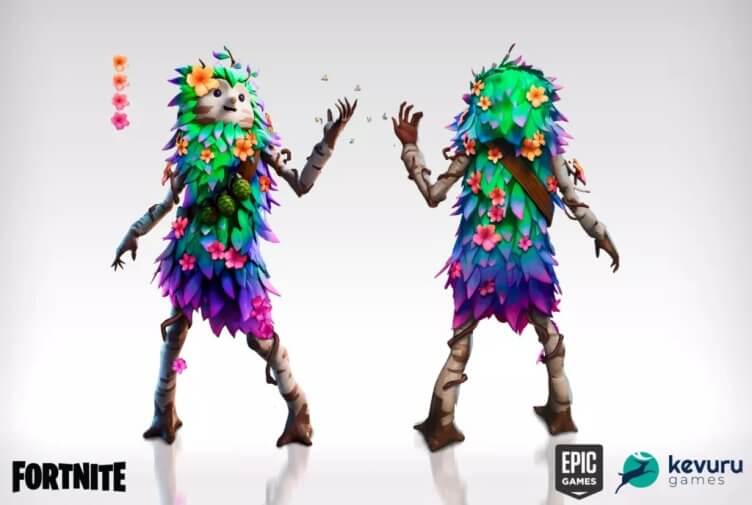
Skins need to look distinctive and readable, but they also have to work across different platforms and performance conditions. That means limits on geometry, materials, and effects are not optional – they’re part of the design process.
Even small details have to be considered in context. A skin that looks strong in isolation might behave differently once placed into a live environment with many players, dynamic lighting, and constant motion.
This is where the trade-off becomes practical. Expression is important, but it has to hold up under real conditions.
How Avatar Systems Are Built
An avatar system is the underlying setup that defines how avatars are created, customized, and used in a game. It’s not just the visual model, but the structure that allows different parts to fit together, animate correctly, and behave consistently in the world.
Most platforms build avatars from modular elements – body, clothing, accessories, sometimes even facial features. An easy parallel would be clothing. People want to wear different pieces from different brands, but they still need to fit the same human body. So, clothes are not totally random pieces of fabric. They follow similar item patterns, form silhouettes, and when designers create them, they think of how they could be combined.
For metaverse game design, it means the system has to support every combination without breaking visually or technically. These are the shared structures that the system needs to have:
- a common skeleton so all avatars can use the same animations
- standardized attachment points for clothing and accessories
- material systems that behave predictably under different lighting
- animation layers that allow movement, gestures, and overrides to coexist
For example, in platforms like Roblox, avatar items are built to fit a shared rig, even when they’re created by different users. That way, everything works with the same animation system and doesn’t break interaction.
The complexity comes from scale. It’s not enough for one avatar to work. Thousands of combinations need to work the same way.
Rigging is one of the biggest technical challenges in large avatar systems. Every clothing item, hairstyle, or accessory has to deform correctly on the same underlying skeleton, regardless of how players combine them. Even small inconsistencies in skin weights or joint placement can cause visible clipping or unnatural movement once thousands of customization combinations become possible.
Performance creates another layer of complexity. Large multiplayer environments rarely render every avatar at full quality. Instead, developers prepare several Levels of Detail (LODs) for the same model, reducing polygon counts and simplifying materials as viewing distance increases. The goal is to maintain stable frame rates without making avatars noticeably different as players move through the world. Balancing visual quality with performance is one of the key technical responsibilities when building scalable avatar systems.
That’s why avatar systems are designed less like characters and more like frameworks. The goal isn’t to create a single model, but to ensure that any version of it still holds together. If you want to dive deeper into this, check out our dedicated article on creating metaverse-ready 3D assets.
The Role of Animation Constraints
Customization suggests freedom, but animation quietly sets the limits. For an avatar to move correctly, it has to follow a shared structure. Animations are built around a specific skeleton – joint positions, proportions, and movement ranges. If an avatar deviates too much from that structure, things start to break. Limbs stretch incorrectly, movement feels off, or interactions stop working as expected.
This is why even highly flexible systems still operate within hidden boundaries. You can change how an avatar looks, but only within a range that the game animation system can support.
10 rules of Working with Animation Constraints
- Keep proportions within a defined range so animations don’t break or stretch unnaturally
- Use a shared skeleton across all avatars to ensure compatibility with existing animation sets
- Maintain consistent joint placement, especially for hands, feet, and spine
- Avoid extreme shapes that interfere with movement or interaction points
- Test animations across multiple avatar variations, not just a single model
- Design animations to be readable and stable, not just realistic
- Account for transitions between actions, not only individual animations
- Ensure accessories and clothing don’t clip or block key movements
- Keep animation behavior consistent across different environments and camera distances
- Treat animation as part of the system, not as a separate layer
Most of these limits stay in the background, but they’re what keep everything working. Without them, movement starts to break down, and avatars stop behaving in a consistent way across the game.
Where Avatar Systems Start to Break
Most avatar systems work well when everything is controlled – one platform, one environment, predictable conditions. The problems show up once that consistency is gone.
One common issue is visual drift. The same avatar can look slightly different depending on where it’s used – lighting changes, materials behave differently, proportions feel off. Nothing is completely broken, but the result isn’t stable either.
Another problem is over-customization. When there are too many options without constraints, avatars stop being recognizable. You get more variation, but less identity. Players can change everything, but that freedom doesn’t always translate into something coherent.
There are also technical breakpoints. Animations don’t always translate well between systems, rigs don’t match perfectly, and certain features behave unpredictably outside their original setup.
These issues are usually small on their own. But together, they affect how consistent an avatar feels over time – and that consistency is what identity depends on.
Ownership and Persistence
For an avatar to feel like an identity, it has to persist. If appearance, items, or behavior reset too often, the connection breaks. Players stop treating the avatar as something that represents them and start treating it as just another temporary setup.
That’s why persistence tends to matter more than how many options you have. It’s less about changing things all the time, and more about having something that stays recognizable.
You can see it in Fortnite. The map, modes, events – all of that keeps changing, but the player’s look carries through. People recognize each other by it.
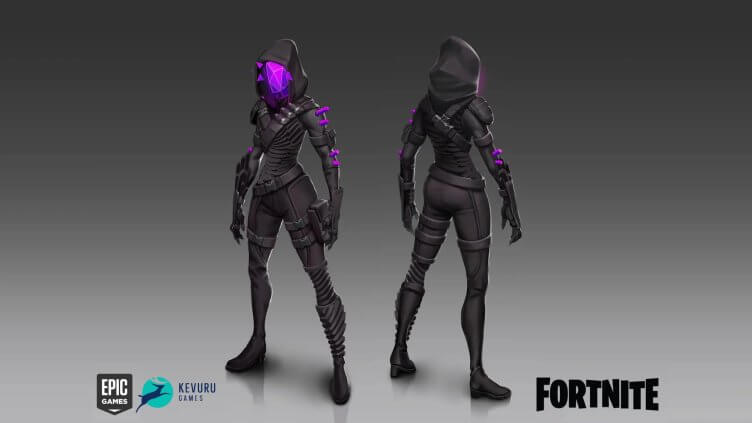
There’s a similar idea behind systems like Ready Player Me. The goal there isn’t just customization, but keeping the same identity across different places, instead of rebuilding it every time.
That part is still developing. But the expectation is already there – players don’t see avatars as disposable anymore.
What This Means for Developers
At a certain point, avatar systems stop being just a content problem and turn into a systems problem.
It’s not only about creating more assets or adding more customization options. The harder part is making sure everything holds together once players start using it in different ways. The same avatar has to look right in different lighting, animate correctly across actions, and remain recognizable even as players modify it.
This shifts what matters in production. Instead of focusing only on visual quality, teams have to think about consistency, constraints, and how different parts of the system interact.
In practice, that usually means:
- keeping asset systems modular so they can scale
- limiting combinations that break readability
- designing animation to support expression, not just movement
- setting performance boundaries early, not after problems appear
None of these decisions are visible on their own. But together, they define whether an avatar feels stable enough to become an identity, or just another interchangeable asset.
At Kevuru Games, we approach 3D avatar design as a creation of something that players want to identify themselves with. We’ve worked with metaverse game art on projects like Mechachain. If you want to hire 3D artists who are proficient in 3D characters design, 3D game modeling, and custom character development, drop us a line.