
“Metaverse, robotics, AI” sounds bigger than it actually is. Put together, it sounds like a list of hype words, something abstract and slightly detached from real production. It suggests some kind of radical shift – new worlds, new tools, new rules. In practice, it’s much simpler.
This isn’t about futuristic worlds replacing games, or robots building assets instead of artists. It’s about how 3D modelling is quietly expanding beyond games into other areas that use the same tools, the same engines, and often the same assets.
A model created for a game can now end up in a virtual environment, a simulation, or even a robotics training scenario. Not because someone planned it that way from the start, but because the underlying technology is shared.
That’s a common thing for many technologies. For example, GPS was originally developed for military navigation, but once the technology became available more broadly, it ended up everywhere: phones, cars, logistics, and even fitness apps.
That’s the real shift that’s now happening with game technologies, too. Game engines are no longer used only for games. AI tools are not creating worlds on their own – they are speeding up parts of production. Robotics teams are using the same environments that were originally built for interactive experiences. It’s not just some “new trends in gaming”. Now, all of this is part of processes that shape the world of 3D modeling, and these changes are equally important to the world of robotics as they are for gaming.
This article is not about predicting a distant future. It’s about understanding what is already changing in how 3D assets are created, reused, and scaled across different contexts.
The “Metaverse” Isn’t One Place – It’s a Use Case
A few years ago, the idea of the metaverse was presented as a single, unified space, like a parallel universe where we would have a parallel life – one platform, one ecosystem, one persistent world where everything connects.
That didn’t really happen, and remembering loud claims about Metaverse, from today, sounds not just overambitious, but almost fantastic.
What did happen is more practical. We now have multiple platforms that behave like persistent 3D environments – places where users spend time, create content, and interact with assets in ways that go beyond traditional gameplay.
Look at Roblox or Fortnite. Both function as platforms, not just games. They host events, user-generated content, social spaces, and branded experiences. People live in these worlds without even thinking of it as a metaverse. The important part isn’t the label. It’s the way assets are used.
What does it mean for 3D modeling? In these environments, 3D assets are no longer one-time deliverables. They need to:
- work across different scenes and experiences
- be reusable and easy to modify
- stay lightweight enough for large audiences
- maintain visual consistency across updates
That changes how they are built from the start. In a traditional game, a prop is usually built for a specific place. It’s tested in one level, under one lighting setup, and as long as it looks right there, it’s good to go. In a persistent environment, that same asset might show up in completely different situations. Different lighting, different surroundings, sometimes even different gameplay contexts.
So the requirement changes. It’s no longer just about how it looks in one scene – it has to hold up wherever it’s used.
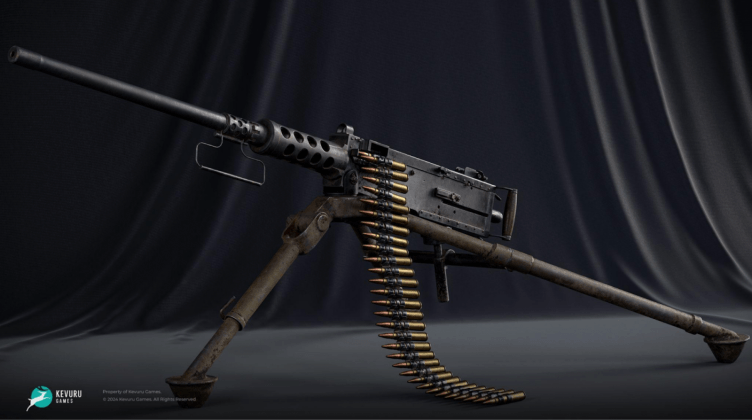
That’s the part of the “metaverse” discussion that actually affects production. Not the idea of a single virtual world – but the requirement for assets to be more flexible, more reusable, and more scalable than before.
Robotics: Where Game Assets Leave Games
This is the part that usually surprises people. 3D modelling isn’t just feeding games anymore. A lot of the same tools, engines, and even assets are now used in robotics – not for visuals, but for simulation.
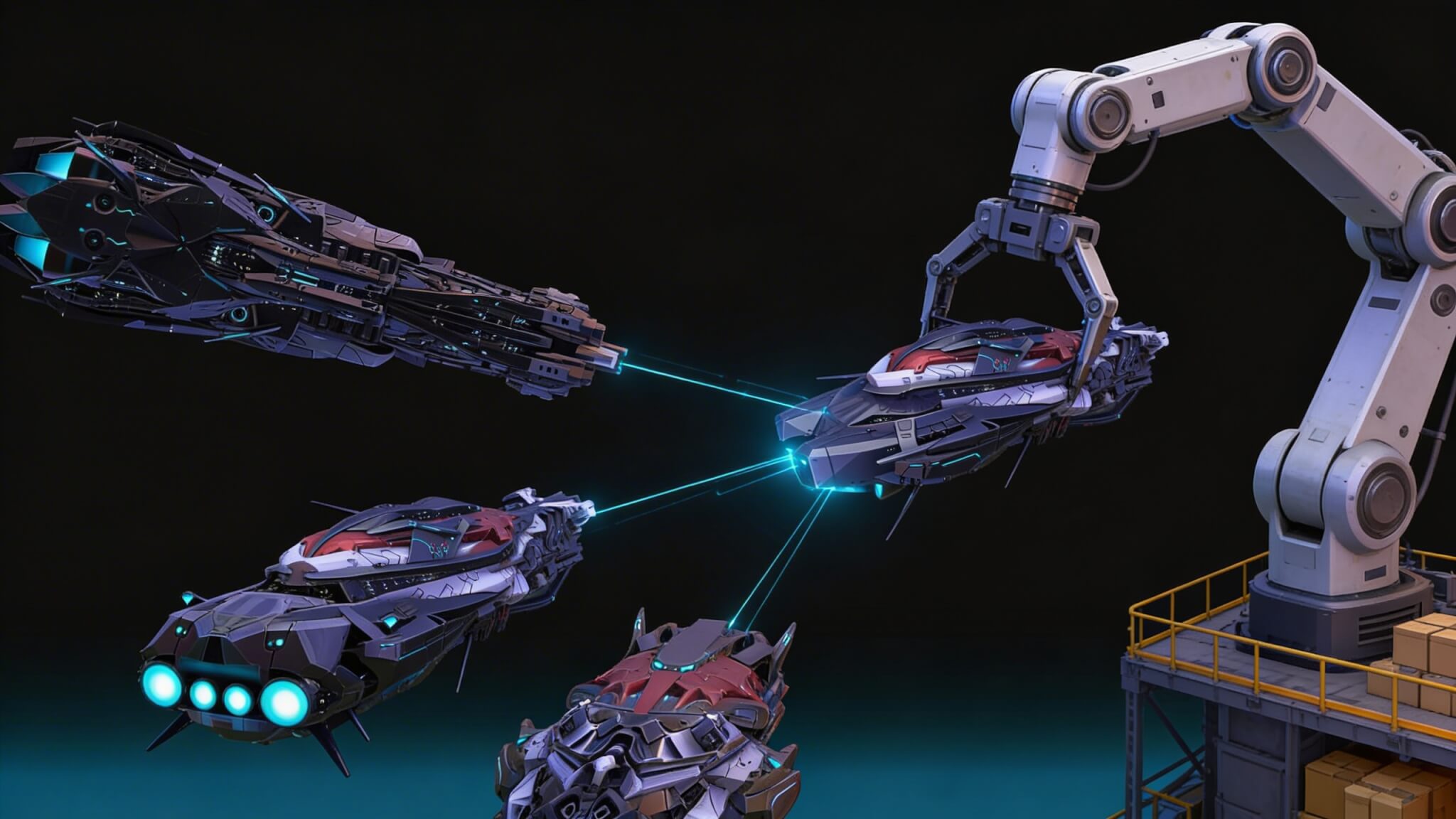
We’re not talking about humanoid robots from sci-fi. It’s mostly practical systems: warehouse robots that move goods, delivery robots, autonomous vehicles, industrial arms used in factories. Before they operate in the real world, they’re often trained or tested in virtual environments. Warehouses, streets, factories – all of that can be recreated in a game engine. In this case, the goal isn’t to make it look good. It’s to make it behave correctly.
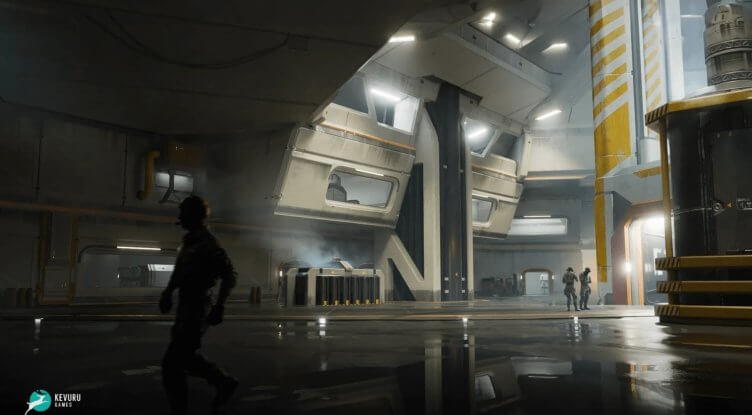
That changes what “good modeling” means. In a game, you can cheat a lot. You can simplify collisions, fake depth with textures, adjust scale slightly if it improves composition. In a simulation, those shortcuts can break things. If a surface is even slightly off, or if the collision doesn’t match what you see, the system can start learning the wrong thing. In games, that might go unnoticed. In simulation, it causes problems pretty quickly.
That’s why robotics teams tend to use platforms like NVIDIA Omniverse. The environments still look like game levels on the surface, but they’re built with accuracy in mind. Things need to line up, behave predictably, and stay consistent – not just look convincing.
For 3D artists, this introduces a new layer of requirements:
- real-world scale matters
- collision needs to match geometry
- materials may need physical properties, not just visual ones
- environments must behave consistently, not just look consistent
The interesting part is that the pipeline overlaps with game development. The same engines, similar asset formats, similar workflows – but used for a different purpose.
That’s where the boundary starts to blur. A 3D asset is no longer just a visual element in the imaginary world of a game. It can become part of a system that interacts with the real world.
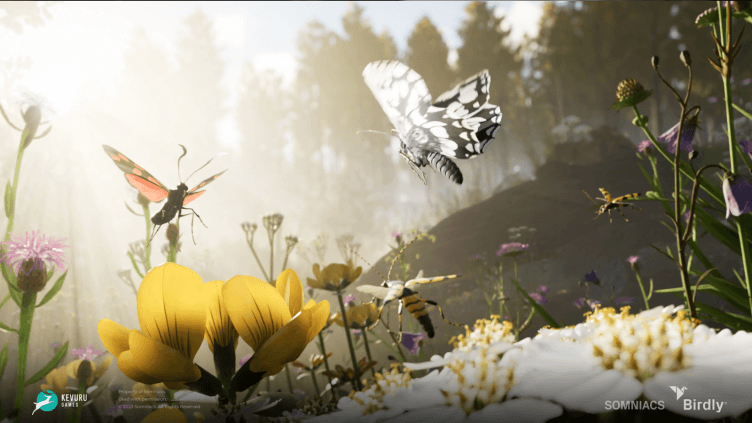
In our company, we’ve had experience working with a VR simulator of a butterfly fly – not robotics, but still a work that required high precision and closeness to real world that’s rarely needed in traditional video games.
One Asset, Multiple Contexts
When you look at all of this together, the change is pretty straightforward. A 3D asset doesn’t necessarily belong to just one project anymore. The same model might start in a game, then get reused in a virtual space, and later end up in a simulation. The tools are similar, the formats usually carry over, and rebuilding everything from scratch each time just isn’t practical.
So instead of being one-time work, assets are starting to move between contexts. That changes how assets are planned from the beginning.
Instead of asking “Does this work in this scene?”, teams increasingly ask “Where else could this be used?” Not because reuse is always guaranteed, but because rebuilding the same thing multiple times is expensive.
It also affects how assets are structured. Clean topology, consistent scale, predictable materials – these things matter more when the asset needs to move between contexts. What used to be a local optimization becomes a general requirement.
You see this more clearly in larger productions, where asset libraries are treated as something that lives beyond a single project. A prop, a building, even parts of an environment – they’re often reused, adjusted, and repurposed instead of being rebuilt every time.
It doesn’t really make modelling more complicated, but it does change how people approach it. You start thinking a bit ahead. Instead of just building something that works for one scene, the question becomes whether it can be reused later without starting from scratch.
3D Model Requirements Across Different Contexts
| Aspect | Games | Metaverse / Persistent Worlds | Robotics / Simulation |
| Primary goal | Visual quality and gameplay readability | Flexibility across multiple use cases | Accuracy and reliable behavior |
| Scale handling | Can be adjusted for composition | Needs to remain consistent across experiences | Must match real-world dimensions precisely |
| Geometry & collisions | Often simplified for performance | Balanced between performance and reuse | Collision must align exactly with geometry |
| Materials | Focus on visual realism or style | Adaptable and consistent across updates | May require physical properties, not just appearance |
| Optimization | Tuned for specific platform and scene | Needs to stay lightweight for wide access | Must support stable simulation, not just rendering |
| Reusability | Often scene-specific | Designed for repeated use and modification | Reused across multiple simulation scenarios |
| Consistency | Works within a single environment | Must stay coherent across different contexts | Must behave predictably in all conditions |
| Production mindset | “Looks good in this scene” | “Works across many scenarios” | “Behaves correctly in real-world logic” |
Why Reusing Assets Matters More Than Ever
What used to be a “nice-to-have” – asset reuse – is now something teams actively measure.
In larger productions, teams usually keep track of how much of a level comes from existing libraries and how much is built from scratch. It depends on the project, but it’s quite common for a significant part of the environment (sometimes around 30–50%) to be reused or adapted rather than created from zero. In live-service projects, that percentage can go even higher over time.
There’s a practical reason for that. Content production is one of the most expensive parts of game development. According to industry estimates and reports from studios and outsourcing vendors, art production can account for about 40% of total development costs on large projects. When you combine that with ongoing updates, the pressure to reuse becomes obvious.
Where Reuse Actually Shows Up
Reuse doesn’t mean copying assets blindly. It usually happens in more structured ways:
| Type of reuse | What changes | What stays the same |
| Modular environments | layout, composition | base meshes, materials |
| Props and set dressing | scale, texture variation | core geometry |
| Materials and shaders | parameters, color | underlying logic |
| LOD chains | resolution | silhouette and structure |
In engines like Unreal, modular kits allow entire environments to be assembled from a limited set of pieces. A building might look unique in-game, but under the hood, it’s built from repeated elements (walls, trims, corners) all designed to snap together.
Why Engines and Tools Push This Further
Modern engines make reuse easier and more predictable. Unreal Engine’s Nanite changes part of the workflow in a practical way. Artists can work with much denser meshes and don’t have to rebuild multiple LODs manually as often. Optimization doesn’t disappear, but there are fewer steps between creating an asset and actually using it in a scene.
Material systems have shifted in a similar direction. In tools like Substance or directly in Unreal, a lot of variation comes from parameters rather than rebuilding textures. You can take one material and adjust color, roughness, or wear to get multiple versions without starting over each time. This is especially important in large projects, where consistency matters as much as variety.
The Shift in Thinking
What’s changing isn’t just the tools – it’s how teams approach modelling. Instead of asking whether an asset looks good in isolation, teams ask themselves new questions:
Can this be reused without breaking visual consistency?
Does it follow shared material and scale rules?
Can it fit into existing modular systems?
Will it behave correctly across different lighting setups?
These aren’t theoretical concerns. They affect production timelines directly. Reducing even 10–15% of new asset creation through reuse can translate into weeks of saved work across a full production cycle.
Why This Matters Beyond Games
This approach also aligns with how assets are used outside traditional game development. In simulation and robotics, environments are usually built from reusable pieces rather than one-off assets. The focus is on consistency and predictability, not uniqueness.
A warehouse setup is a good example. The same shelves, floor sections, and objects are reused across different scenarios, with small adjustments depending on the task. That’s where the connection becomes clear.
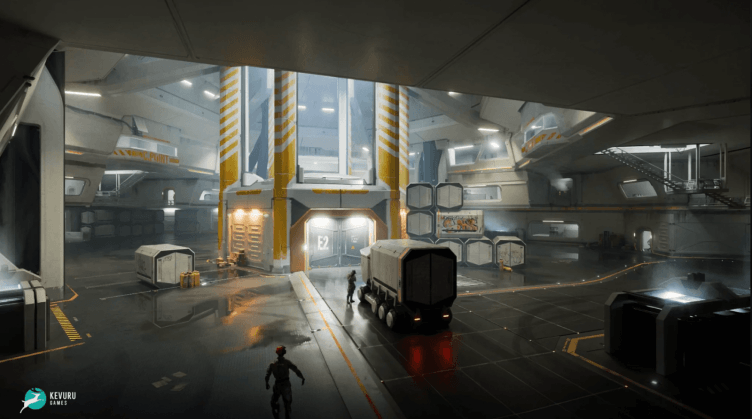
The same practices that improve efficiency in game production, like modularity, reuse, standardization, also make assets more transferable across different contexts. And that’s the part that continues to expand.
AI: Less Creation, More Compression
Here comes the second hype word. If there’s one place where expectations and reality don’t quite match, it’s AI. In the world of gaming, big AI startups promised a way bigger revolution than the one that actually happened. A lot of the conversation still revolves around generating full assets or entire worlds, but that’s not where it’s having the biggest impact in production.
Most of the time, AI shows up in smaller steps – the ones that don’t define the final look but take up a surprising amount of time. Texture cleanup, small variations, UV adjustments, filling in missing detail – all the repetitive work that scales badly across large asset libraries.
That’s where AI fits naturally. It doesn’t decide how an asset should look, but it can reduce the number of manual passes needed to get it into a usable state. The core decisions still sit with artists.
According to the GDC State of the Game Industry 2025 report, generative AI is already part of everyday workflows for a lot of teams. Around 52% of developers say their companies are using it in some capacity, and about 36% use it directly in their own work. In practice, most of that use is pretty grounded – ideation, quick iterations, speeding up routine steps – rather than generating final assets.
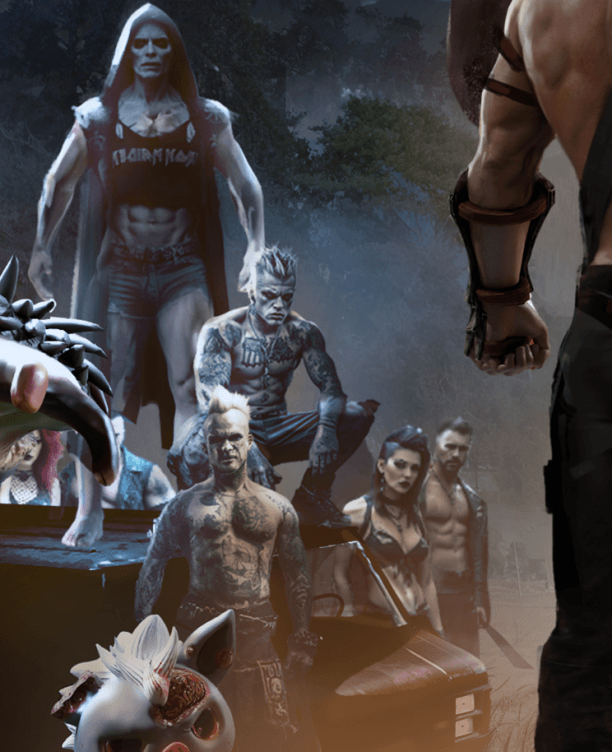
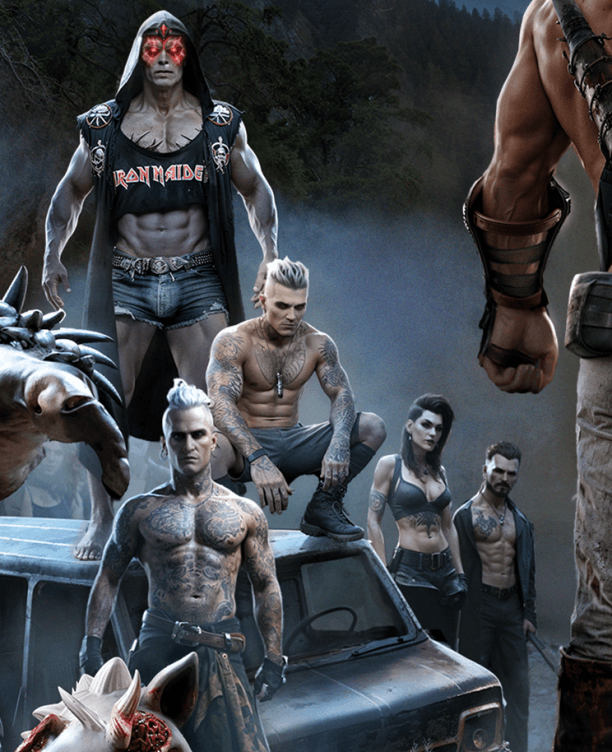
The negative side of all of this is that the usage of AI did cause layoffs in the industry, but the changes are not that revolutionary. It’s still more about compressing time spent on boring, routine work rather than creating 3D models for games from scratch. At Kevuru Games, we integrate AI into our pipelines to save time when it’s critical. We have explained exactly what such a pipeline looks like in this article.
Real-World Accuracy Is Becoming Part of the Pipeline
As 3D assets move beyond games, one requirement keeps showing up more often: they need to match reality, not just look convincing.
In traditional game production, there’s a lot of flexibility. Scale can be adjusted slightly if it improves composition. Collisions can be simplified. Materials can cheat a bit as long as the final image looks right. Players rarely notice. That approach doesn’t always hold outside games.
In simulation or robotics workflows, small inaccuracies start to matter. If a doorway is slightly narrower than it should be, or if object dimensions don’t match real-world proportions, it can affect how systems behave. In those cases, visual plausibility isn’t enough – the asset needs to be structurally correct.
This is where practices like photogrammetry and real-world reference capture become more important. It’s not only about realism anymore, it’s about accuracy. Measurements, proportions, how things sit in space – all of that has to line up, not just look convincing.
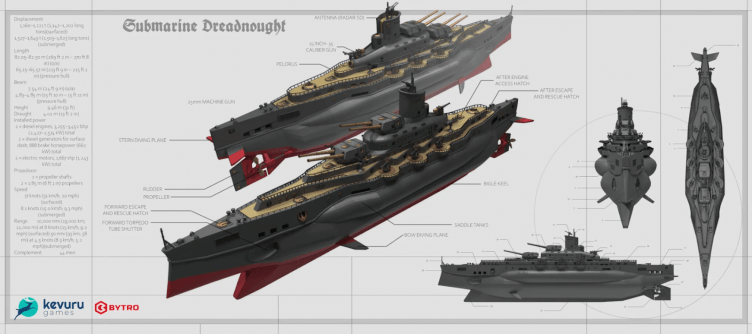
You can see this in how the tools are being used. Platforms like NVIDIA Omniverse or Unreal Engine are showing up more often in things like simulations or digital twins – essentially virtual copies of real environments. In those cases, it’s not enough for something to look right. It has to behave the way it would in the real world.
For 3D artists, this adds a slightly different layer of thinking. It’s no longer only about how an asset looks under lighting, but also how it behaves in space. The scale has to be accurate, collisions have to match geometry precisely, proportions must be consistent with the real-world references.
This doesn’t replace artistic judgment, but it does expand the expectations. In some contexts, a 3D model is no longer just visual content. It becomes part of a system that needs to behave correctly.
Conclusion. How 3D Modelling Is Expanding Beyond Its Original Purpose
If you look at all of these changes together, the pattern is pretty clear. 3D modelling is no longer tied to a single use. What used to be created for a game is now expected to move between different contexts – interactive environments, simulations, training systems, even industrial workflows. The tools didn’t change overnight, but the expectations around the output did.
That shift is already visible in how teams work. Asset reuse is no longer optional. Real-world scale is becoming more important. Pipelines are being built with flexibility in mind, not just the final image.
What this points to is not a replacement of game development, but an expansion of it. Game pipelines are becoming a foundation for other industries. Game assets are becoming reusable across multiple systems. Game engines are becoming general-purpose 3D platforms.
And that changes the role of modelling itself. It’s no longer just about creating something that looks good in one scene. It’s about building something that can hold up in different contexts. At Kevuru Games, we believe that this is the no-hype future of 3D modeling. And that’s what we prepare to work with.