
Do you know why pricing a vide game porting is a hard one? When it’s a separate project of porting an existing game, that’s one thing. But when the game has to be released on several platforms from the start, that’s another story. When porting gets treated as a final step, there’s not much left on the budget, and people don’t expect it to be a serious expense. Something like “take what’s already built and move it to another platform.” In reality, it doesn’t work that way.
Sometimes it’s close to that. If the engine fits, performance holds, and inputs don’t need much change, the work stays relatively contained. But that’s not the typical case.
More often, things start to shift once you try to run the game in a different environment. Controls don’t quite fit, UI needs adjustments, performance isn’t stable, platform rules start to limit things. None of it looks critical at first, but it builds up.
That’s why the cost ends up varying so much. Not because studios price it differently, but because the amount of adjustment behind the same word “porting” can be completely different.
Before talking numbers, it makes more sense to look at what actually changes during the process and where the time goes.
What Affects Game Porting Cost in 2026
Once you get past the idea of “just moving the game,” the cost starts to make more sense. It’s not one thing that drives it, but a set of changes that tend to show up during the process.
A lot depends on how the original project was built. If the codebase is clean, the engine is supported on the target platform, and performance has some headroom, the work stays predictable. If not, you start dealing with fixes before the port even begins.
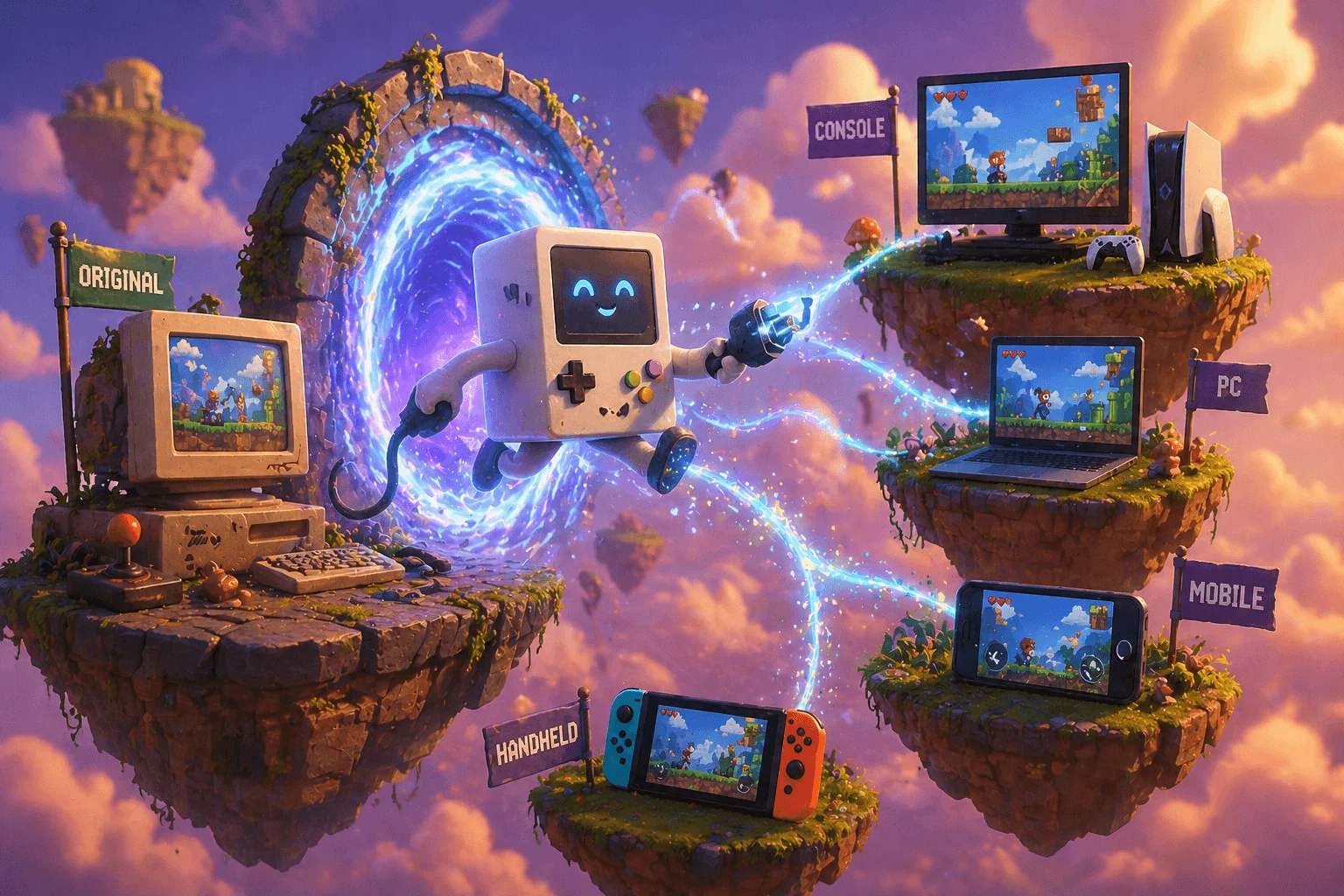
The gap between platforms matters more than the platform itself. Moving from PC to console is one kind of task. Taking a PC or console game to mobile is a different situation entirely. Resolution, memory limits, input, even session length – all of it changes how the game behaves.
Performance is where things usually slow down. What runs fine on a high-end PC can struggle on console or mobile. That leads to optimization passes, asset adjustments, and sometimes reworking parts of the logic just to keep things stable.
Input and UI are another layer. A mouse and keyboard setup doesn’t translate directly to a controller. Touch input is a different problem again. Menus, HUD, navigation – they often need to be rebuilt rather than adjusted.
Then there are platform requirements. Certification, store requirements, platform integrations. None of this changes the core game, but it still has to be cleared before release. And it usually happens late, when the team already expects the port to be close to done.
The hard part is not one big task. It is the back-and-forth. A requirement fails, the build goes back to the team, fixes are made, then it goes through checks again. This can repeat several times before submission is finally clean. That cycle is where a lot of the final time goes.
Game Porting Cost by Platform
Porting cost is easier to understand when you look at typical scenarios instead of abstract “complexity.” The same game can fall into very different budgets depending on where it’s going.
First, here’s a general baseline based on scope:
| Porting Type | Price Range |
| Simple port (same engine, minimal changes) | $10,000 – $40,000 |
| Mid-level port (platform adaptation) | $40,000 – $120,000 |
| Complex port (optimization + redesign) | $120,000+ |
From there, platform differences start to shape where your project lands inside that range.
PC to Console
| Scope Level | Typical Cost |
| Simple | $20,000 – $50,000 |
| Mid-level | $50,000 – $120,000 |
| Complex | $120,000 – $250,000+ |
Most projects fall into mid-level. The core game stays the same, but controller support, performance stability, and certification take time. If the codebase is not prepared, costs move toward the upper range.
Console to PC
| Scope Level | Typical Cost |
| Simple | $10,000 – $30,000 |
| Mid-level | $30,000 – $80,000 |
| Complex | $80,000 – $150,000+ |
This direction is usually less demanding. The main work is around input flexibility, graphics settings, and hardware scaling. Costs stay lower unless significant rework is needed.
PC or Console to Mobile
| Scope Level | Typical Cost |
| Simple | Rare |
| Mid-level | $60,000 – $150,000 |
| Complex | $150,000 – $500,000+ |
This is where the work usually expands. Getting the game to run is only part of it – making it usable on a smaller screen and playable with touch takes additional changes.
At that stage, it’s no longer just a port. Some systems need to be adjusted so the game works naturally on the new platform.
Mobile to PC or Console
| Scope Level | Typical Cost |
| Simple | $15,000 – $40,000 |
| Mid-level | $40,000 – $100,000 |
| Complex | $100,000 – $200,000+ |
Costs depend on expectations. A direct port stays relatively contained. If the goal is to upgrade visuals or expand gameplay, the scope grows.
What This Means in Practice
The platform itself doesn’t define the cost. What matters is how much the game needs to change to feel natural on that platform.
PC → Console is mostly adaptation.
Console → PC is usually lighter.
PC/Console → Mobile is often a rebuild in parts.
Mobile game porting → PC/Console depends on how far you want to push quality.
That’s why two projects with similar starting points can end up in completely different budget ranges.
Game Porting Cost by Scope
Looking at platform alone is not enough. Two projects targeting the same platform can end up in completely different budgets depending on how much of the game needs to change.
It helps to look at video game porting in terms of scope rather than platform.
| Scope Type | What’s Included | Typical Cost |
| Basic port | Build adaptation, minor fixes, same assets and logic | $10,000 – $40,000 |
| Optimized port | Performance tuning, bug fixing, stability improvements | $40,000 – $100,000 |
| Enhanced port | UI changes, control updates, platform-specific features | $80,000 – $150,000+ |
| Full adaptation | Asset rework, gameplay adjustments, partial redesign | $120,000 – $300,000+ |
A basic port usually means the game already fits the target platform. The work stays technical and doesn’t affect how the game feels.
Once performance or stability becomes an issue, the scope moves into optimization. This is where time starts to add up, especially if the original project wasn’t built with portability in mind.
Enhanced ports go further. At that point, it’s less about making it run and more about making it feel right. UI and controls usually need to be adjusted, and sometimes platform-specific features get added.
With full adaptation, the scope shifts further. Some parts of the game have to be reworked so it actually fits how people expect to play it on that platform.
In practice, projects rarely stay within one scope. The work tends to expand as things come up along the way. The scope tends to expand as new issues show up during the process. They move between them as new issues appear during the process.
Hidden Costs of Game Porting
Most estimates focus on getting the game to run on the target platform. What usually gets missed are the things that show up after that point.
- certification and resubmissions – failing checks means fixes, rebuilds, and another round of review
- platform-specific bugs – issues that only appear on certain hardware or under specific conditions
- backend adjustments – changes to servers, matchmaking, or account systems to match platform rules
- controller and input edge cases – small inconsistencies that take time to track down and fix
- store integration – achievements, cloud saves, payments, and platform services
- post-release fixes – patches that are often required after launch
None of these look like major features, but they take time and usually come late in the process.
That’s why porting costs tend to grow after the main work is done.
Outsourcing vs In-House Porting Cost
Porting is one of those areas where structure matters as much as the work itself. The same scope can lead to different costs depending on how the team is set up.
| Factor | In-House Team | Outsourcing |
| Cost structure | Fixed monthly costs | Tied to milestones or deliverables |
| Team setup | Requires hiring and ramp-up | Team is ready from the start |
| Platform expertise | Depends on internal experience | Usually already available |
| Certification | Learned during the process | Often handled routinely |
| Flexibility | Harder to scale | Easier to adjust team size |
| Idle time | Paid | Not paid |
With an in-house game porting developers team, salaries, tools, and management stay on the payroll regardless of how much porting work is actually being done. This works when there is a steady pipeline of projects, but becomes less efficient when the workload comes in waves.
Game porting in outsourcing works differently. The team is brought in for a specific scope, and the cost follows the actual work. This makes it easier to scale up during intensive stages like optimization or certification, and scale down once those are done.
In practice, porting often benefits from experience with platform requirements and certification. Teams that deal with it regularly tend to move faster and avoid common issues, which affects both timeline and cost.
How to Estimate Your Game Porting Cost
A useful estimate usually starts with a quick reality check. If the team can describe what needs to change, the numbers tend to hold. If not, the scope shifts later and the budget follows.
Start with a few basics:
- target platform – where the game is going and what that platform expects
- engine and codebase – whether the current setup supports the target platform without major changes
- performance targets – frame rate, memory limits, loading times
- input and UI – how controls and interface need to change
- feature gaps – online systems, achievements, saves, platform services
- asset adjustments – resolution, textures, LODs, memory footprint
- certification scope – what needs to pass platform requirements
The goal here is not to define everything in detail, but to see where the work is likely to appear. If most of the answers are clear, the estimate will be close. If not, the scope will expand once the port starts.
In practice, the first estimate is rarely final. It becomes more accurate as the team gets into the build and sees what actually needs to be adjusted.
Timeline and Cost
Porting time is closely tied to cost, but not always in a linear way. Some stages move quickly, others slow down once issues start to appear.
| Project Scope | Typical Timeline |
| Simple port | 1 – 3 months |
| Mid-level port | 3 – 6 months |
| Complex port | 6 – 12+ months |
A simple port usually stays within a short timeline if the engine supports the target platform and performance is already stable.
Mid-level projects tend to take longer because the work doesn’t come all at once. Small adjustments keep adding up – performance tweaks, UI changes, platform requirements. Each one is manageable, but together they extend the timeline.
Complex ports usually don’t slow down because of a single issue. It’s more a series of smaller ones that show up during the process – optimization passes, certification feedback, platform-specific bugs. They come in stages rather than all at once.
In practice, timelines rarely stay exactly as planned. As testing and certification begin, new constraints appear, and the schedule adjusts around them. That’s why time ends up being the main cost driver.
Real Example: PC to Console Porting in Practice
To understand where the time actually goes, it helps to look at a real project Kevuru Games did a couple of years ago.

During the porting of Poppy Playtime Chapter 2 from PC to console, the initial assumption was similar to most projects – take the existing build and adapt it to new hardware. In practice, the work quickly shifted toward performance and system-level changes
One of the first issues was lighting. The game relied on dynamic lighting and ray tracing, which didn’t carry over to consoles. So instead of forcing the same setup, the lighting was rebuilt and baked to keep the visuals consistent without breaking performance.
Geometry caused another problem. The original scenes were too heavy for efficient light baking and runtime performance. This required reworking meshes and rebuilding lightmaps rather than just adjusting settings.
Rendering also became a bottleneck. A high number of draw calls led to performance drops in certain areas. Fixing this meant restructuring how assets were combined and rendered, not just optimizing individual elements.
Even systems that seem unrelated to performance, like physics, had to be revisited. Moving the project to a newer engine version introduced conflicts that required additional fixes to keep gameplay consistent.
There were also smaller issues that still took time. Some shaders didn’t work with the console pipeline and had to be rebuilt. Character assets exceeded platform limits and needed to be simplified. Even video playback had to be reimplemented to avoid crashes on certain hardware.
None of these changes were part of “new features.” They were changes needed to make the game actually work as expected on a different platform.
With a team of more than ten people, the project took several months. Most of that time went into optimization and adjustments, not the transfer itself.
Conclusion
Porting rarely follows a clean plan from start to finish. You begin with a build that works in one environment, then start adjusting it piece by piece until it holds up somewhere else. Some parts carry over without much effort. Others take longer than expected, not because they’re complex on their own, but because they affect several systems at once.
What makes the difference is usually not the platform, but the condition of the project before the port starts. If things are stable, organized, and already close to the target requirements, the work stays predictable. If not, more time goes into bringing the game into a usable state before it can even be adapted.
That’s why estimates tend to shift. Not because the scope changes on paper, but because the real scope only becomes clear once the build is tested on the new platform.
If you’re planning a port, the only way to get a clear estimate is to look at the build itself. Once there’s access to the project, target platform, and a rough idea of what needs to change, the numbers usually become much more specific.