When people talk about the future of 3D modelling, they often see it as moving in one direction that is rather tech-driven: higher fidelity, more realism, more automation. But that assumes the industry moves as a single unit. That’s not exactly the case.
AAA and indie studios are solving very different problems. One is scaling production across hundreds of artists and terabytes of assets. The other is trying to create distinct visual identity with limited resources and small teams. The tools may overlap, but the priorities do not.
That divergence is what will shape the next decade of 3D modelling.
AAA is pushing toward industrialization – photogrammetry, scanning pipelines, high-density meshes rendered in real time. Indie is refining efficiency – stylization, modularity, clarity, and smart reuse.
Both are evolving. Just not in the same way.
AAA: From Sculpting Assets to Engineering Pipelines
In large-scale productions, 3D modelling is becoming less about isolated asset creation and more about system integration.
In big productions, modelling isn’t just about sculpting a beautiful asset and handing it over. It’s about how that asset lives inside a much larger machine.
Take The Last of Us Part II. A huge part of its visual realism comes from scanning real-world materials. Think about something simple like a rock. In older pipelines, someone would sculpt it from scratch in ZBrush, build the texture, tweak it, iterate. Today, teams often just go outside and scan a real one. They walk around it with a camera, shoot it from every angle, and feed those images into reconstruction software.

Image source: https://en.gamegpu.com/
But scanning is just the starting point. Raw scan data is messy. It needs cleanup, retopology, optimization, shader adjustments, and proper integration into lighting systems. It all takes many many hours of refinement.
Or look at Cyberpunk 2077. The density of that world – neon signage, layered props, detailed interiors – isn’t just the result of talented modellers. It’s the result of a structured asset library. Modular pieces are reused intelligently. Materials are standardized. Level art relies on shared kits to maintain consistency at scale.
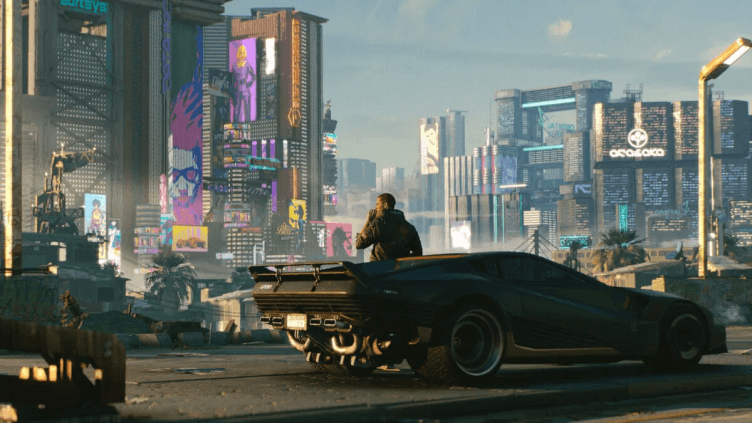
Image credit: Cyberpunk 2077
In both cases, modelling isn’t isolated craftsmanship. It’s coordinated production. The result is visual density that would have been impossible a decade ago.
But here’s the shift: the bottleneck is no longer sculpting detail. It’s managing it.
AAA modelling is moving toward:
- pipeline automation
- asset version control at scale
- LOD strategy aligned with real-time rendering systems
- cross-department synchronization between art, tech art, and engine teams
The future AAA modeller will need to think beyond form and silhouette. They’ll need to understand memory budgets, shader complexity, streaming systems, and runtime performance constraints.
In other words, modelling is becoming more technical – not less artistic, but more systemic.
And that changes the role itself.
Indie: Style Over Scale
If AAA studios are trying to manage complexity, indie teams are usually trying to avoid it.
Smaller teams don’t have the luxury of scanning real-world materials or maintaining massive asset libraries. What they do have is control. Fewer people. Shorter pipelines. Faster decisions.
Take Valheim. The low-poly look isn’t there because the team couldn’t do more. It’s there because they didn’t need to. The shapes are simple, sometimes almost rough, but the atmosphere carries it. The game is not trying to compete with ultra-realistic AAA visuals. It’s following another path. Not every game has to impress everyone. If the style is clear and consistent, the audience will find it.
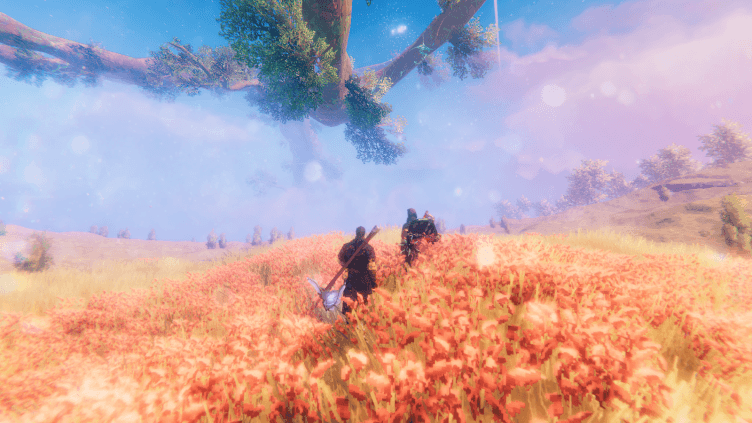
Image credit: https://www.valheimgame.com/
It’s fully 3D, large in scale, and still clearly indie in production logic. The world isn’t overloaded with micro-detail. Instead, it relies on modular industrial elements (pipes, conveyors, platforms, structural frames) all designed to snap together cleanly.
The visual identity doesn’t come from extreme realism. It comes from consistency. Surfaces are readable. Materials are controlled. Geometry is practical. Even when the player builds massive factories, the scene doesn’t collapse under visual noise because the modelling rules stay disciplined.
It’s a good reminder that scale doesn’t automatically require photorealism. You can build a complex 3D world without chasing cinematic density – as long as your asset system is coherent.
Satisfactory 1.0 Launch Trailer
In indie 3D modelling, efficiency becomes part of the design language.Instead of pushing fidelity higher and higher, teams often focus on readable shapes, modular environments, reusable props, and stylized materials that hide repetition. There’s less room for waste. Every asset has to justify the time spent on it.
That constraint often leads to smarter decisions. If AAA is solving “How do we handle more detail?”, indie is solving “How do we say more with less?”
And sometimes, that limitation becomes the advantage.
AI in 3D Modelling: What Actually Changes
Now comes the obvious question: where does AI fit into all of this? Not where most headlines suggest.
AI is not replacing sculpting in AAA pipelines, and it’s not suddenly building entire worlds for indie teams. What it’s doing – quietly – is reducing friction. In practice, AI shows up in very specific places:
- automatic retopology suggestions
- UV unwrapping assistance
- texture upscaling
- normal and height map generation
- smart material variation
- LOD creation support
These aren’t glamorous tasks. They’re time-consuming ones. For a AAA studio, shaving hours off repetitive cleanup across hundreds of assets can translate into weeks saved at production scale. For an indie team, it can mean the difference between shipping and slipping.
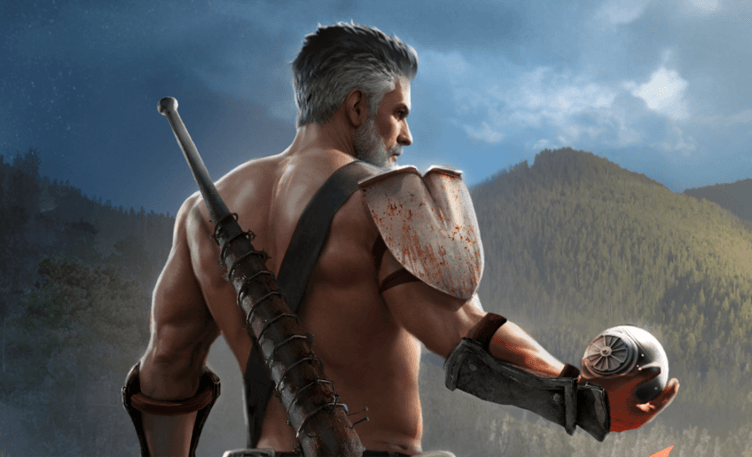
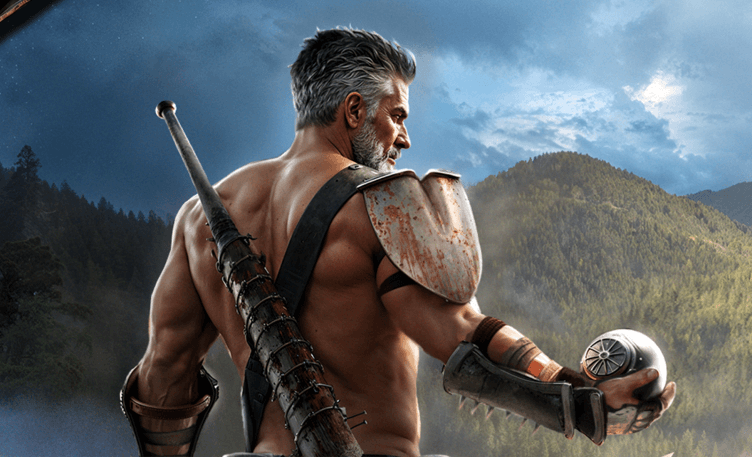
The important shift is this: AI doesn’t create the core asset. It accelerates the parts that don’t require creative judgment. Here is the work that artists do:
- define form
- control proportions
- shape silhouettes
- establish material logic
- set the visual tone
AI simply helps with the technical polish, especially where precision and repetition matter more than artistic intuition. The real impact won’t be visible in screenshots. It will be visible in production timelines.
And that’s where both AAA and indie teams start to converge – not in style, but in the need to move faster without lowering quality.
A Practical Example: Keeping Things Efficient on BallBuds
On projects like BallBuds at Kevuru Games, the challenge wasn’t visual overload or ultra-realism. It was speed, clarity, and consistency.
The game has a stylized direction, which immediately changes how you approach modelling. You’re not chasing micro-detail. You’re chasing clean shapes and readable forms that work well in motion.
In that context, the biggest risk isn’t “not enough polygons.” It’s wasting time on polish that doesn’t affect player perception.
For BallBuds, the focus was on:
- keeping geometry clean and lightweight
- making sure silhouettes read clearly at gameplay distance
- ensuring assets behaved correctly inside the engine
- maintaining stylistic consistency across iterations
AI-assisted tools were used carefully, mostly where they reduced repetitive technical work. For example, speeding up texture refinement or helping generate small material variations that were later adjusted manually.
The key was control. Nothing was used raw. Everything was reviewed, refined, and aligned with the game’s established art direction. In a project like this, AI doesn’t redefine modelling. It protects time. And in smaller-scale productions, time is often the most limited resource.
The Skill Set Is Changing – Slowly, But Clearly
One of the biggest shifts isn’t happening in software. It’s happening in expectations. Ten years ago, a strong 3D modeller could focus almost entirely on sculpting and texturing. Today, especially in larger teams, that’s rarely enough.
In AAA environments, artists are expected to understand how their assets behave in engine. That means thinking about:
- poly density distribution
- LOD transitions
- shader complexity
- material instancing
- streaming constraints
- and many more…
It’s no longer just “Does this look good in Marmoset?” It’s “Does this hold up under dynamic lighting, at runtime, with dozens of similar assets loaded?”
Indie teams face a different pressure. There, the modeller often wears multiple hats. You might model, texture, set up materials, drop assets into the engine, and even adjust lighting. The workflow is tighter, but the responsibility is broader.
What’s interesting is that both paths demand more awareness of systems.
The future 3D artist isn’t becoming less creative. But they are becoming more technical. They need to understand how their work fits into performance budgets, production timelines, and pipeline logic. And this doesn’t mean everyone becomes a technical artist. It means the wall between “art” and “tech” is thinner than it used to be.
The modeller of the future will still care about form and composition. But they’ll also think about efficiency, integration, and iteration speed – because that’s where modern production lives.
What Won’t Change
With all the talk about AI, scanning, real-time pipelines, and automation, it’s easy to assume that everything about 3D modelling is being rewritten.
It isn’t.
Some fundamentals haven’t moved in decades – and probably won’t. A strong silhouette still matters more than micro-detail. If a character or prop doesn’t read clearly from gameplay distance, no amount of texture resolution will fix it.
Proportions still determine believability. Even in stylized worlds, internal logic has to hold. If something feels “off,” players notice – even if they can’t explain why. Material logic still drives realism. Wood has weight. Metal reflects differently depending on roughness. Fabric folds in predictable ways. These aren’t trends. They’re observation skills.
And perhaps most importantly: cohesion still beats complexity. A consistent art direction with moderate detail almost always ages better than hyper-detailed assets stitched together without a clear visual language. That’s true in AAA. It’s even more obvious in indie.
Technology cycles every few years. Engines change. Tools improve. AI tools evolve. Taste evolves much slower. No matter how advanced pipelines become, modelling will still depend on observation, design intent, proportion control, visual hierarchy, and clarity in gameplay context.
In other words, the craft doesn’t disappear. It just operates inside smarter systems. And that might be the most realistic way to think about the future.
Two Roads, One Discipline
If you zoom out, the future of 3D modelling doesn’t point in one direction. It splits.
AAA studios will continue pushing scale – more data, more density, more integration between departments. Their challenge will be managing complexity without slowing production.
Indie teams will continue refining efficiency – stronger style, smarter reuse, clearer pipelines. Their challenge will be standing out without chasing technical arms races.
The interesting part is that both sides are learning from each other. AAA is starting to value stylization and readability again, especially for gameplay clarity. Indie teams are adopting more advanced tools to speed up iteration without inflating scope.
And across both, one pattern is clear: The future is less about “more polygons” and more about smarter decisions. Smarter asset reuse. Smarter integration with engine constraints. Smarter use of automation. Smarter production planning.
The modeller of the next decade won’t win by simply adding more detail. They’ll win by understanding where detail matters — and where it doesn’t.
In the end, 3D modelling isn’t disappearing into AI or being swallowed by automation. It’s becoming more strategic. The craft remains. The environment around it gets faster. And the studios that understand that balance – whether AAA or indie – will shape what the next generation of games actually looks like.
A Few Numbers That Explain Where Things Are Going
Trends and future projections are not the most reliable source, even when provided by top industry professionals. But here are a few data points that help to get some good ground for the state of 3D modeling now:
- In Google Cloud’s 2025 developer research (615 developers surveyed), 87% said they already use some form of AI in their workflows, and 95% said it reduces repetitive tasks. Around 44% of developers use agents to optimize content and process information such as text, voice, code, audio, and video rapidly.
- GDC’s 2025 State of the Game Industry coverage reported that 52% of surveyed developers work at companies that have implemented generative AI, and 36% personally use it.
- The same report shows what exactly gen AI is used for: research and brainstorming (81%), administrative tasks like email (47%), prototyping (35%), testing or debugging (22%), asset generation (19%), player-facing features (5%).
- Generative AI has received lots of criticism from the professional community. Set aside copyright concerns, many developers think it has a negative impact on different areas. And the number of people who think so is rising – 52% in 2026 GDC report compared to 30% in 2025. Only 7% of respondents saw it as positive in 2026.
Now, here’s the useful part for this article: those numbers don’t mean “AI is making games.” They mostly mean teams are trying to compress production time, and 3D art pipelines are one of the biggest places to do it.
What this looks like in practice
| Pipeline pressure | AAA reality | Indie reality | What’s getting adopted first |
| Asset volume | Thousands of assets, many owners, strict consistency | Small libraries, fewer assets, faster iteration | Standardized kits, reuse systems, strict naming/versioning |
| Geometry strategy | Dense meshes can survive longer in-engine (Nanite-style), but still need rules | Geometry kept simple for speed and readability | More modular modelling, fewer unique hero assets |
| Time sinks | Cleanup across many assets becomes the hidden cost | “Polish time” can kill shipping dates | Tools that reduce repetitive work (UV/retopo helpers, detail polish) |
| AI usage pattern | Pipeline acceleration at scale | Time protection for small teams | Assistive steps, not raw outputs |
The Unseen Part of 3D Modelling
When people imagine the future of 3D modelling, they often think about visible change – higher fidelity, better shaders, more realistic lighting.
But most production friction doesn’t live there. It lives in the small, repetitive steps that multiply across dozens or hundreds of assets. Retopology that has to be redone. UV layouts that need adjustment after scale changes. LOD chains that don’t transition smoothly. Materials that break under a different lighting setup. Assets that technically look fine but fail memory or streaming constraints.
In AAA, this friction compounds because of scale. One inefficient workflow multiplied by 2,000 assets becomes a scheduling problem.
In indie, the friction is different (but not too much). When a team of several people does all the job, performing 15 roles, the time that can be saved is even more precious.
That’s why the future of 3D modelling may not look dramatic from the outside. The real evolution will be in compression, which means:
- fewer manual passes
- better interoperability between tools
- smarter asset validation inside engines
- earlier performance feedback
- clearer modular standards
In AAA, this means pipelines that flag issues before they cascade. In indie, it means tools that reduce iteration fatigue.
The irony is that players won’t see most of this. They won’t know an asset passed through automated validation or that LOD transitions were generated with assistance. What they will see is stability. Cohesion. Fewer visual inconsistencies. More reliable performance. And that’s where the future becomes less about spectacle and more about discipline.
Against the Stereotype. Why Photorealism Is Not Always Progress
There is a quiet assumption in the industry that more realism equals advancement. Higher resolution textures, denser meshes, physically accurate shaders – all of it is framed as evolution. And in some cases, it is. But it’s not automatically improvement.
Photorealism increases production cost exponentially. Every surface demands believable wear. Every prop must survive scrutiny in close-up shots. Lighting becomes less forgiving. Animation errors stand out more. What once could be suggested now has to be fully justified.
In large AAA productions, this makes sense, as cinematic immersion is what players often expect from the large releases. Titles like Red Dead Redemption 2 built entire ecosystems of detail – from weather systems to animal behaviors – to support visual realism. But that level of density sometimes is the reason why such productions spend years in the so-called development hell.
For smaller teams, chasing the same benchmark can become a trap. Increasing geometric detail does not automatically improve player experience. In many cases, clarity and responsiveness matter more than surface complexity.
Stylization, when intentional, often scales better. It creates stronger identity. It ages more gracefully. It reduces the burden of perfect physical accuracy. And it allows teams to allocate time toward mechanics, level design, and polish rather than microscopic texture adjustments.
The future of 3D modelling may actually involve more conscious restraint. Not because technology can’t handle more detail – but because design priorities don’t always benefit from it. Higher poly counts are a technical achievement. They are not a design goal. And that distinction will become increasingly important as tools continue to remove technical limits.
The Future Is a Choice, Not a Direction
If there’s one mistake the industry keeps making, it’s assuming that technology sets the course.
It doesn’t.
Engines will get faster. Geometry limits will stretch. AI tools will compress production time. But none of that decides what games should look like. It only expands what is possible.
AAA studios will continue building massive, technically astonishing worlds. Indie teams will continue proving that clarity, style, and strong art direction can outperform raw density. Both approaches will coexist – sometimes even merge.
What will matter most in the next decade of 3D modelling isn’t how much detail we can push. It’s how deliberately we use it.
The strongest teams won’t be the ones with the most polygons. They’ll be the ones who understand where detail creates value – and where it simply creates noise. As fast as technology accelerates, taste, judgment, and restraint will always be the ones that decide whether it all makes sense.