
Imagine a game that will launch in a year from now. What do you know about it? An abstract description shining with words like “unprecedented”, “immersive”, “innovative mechanics”, and so on.
There’s no proof yet of how unprecedented and innovative the game will be. The only real thing we can see is game art on the poster.
This piece of art is the first that the game will be judged upon, before it even comes out. If the visuals are boring and unoriginal, the launch campaign is doomed, as well as sales and critical reception.
Once you’ve pictured this situation, you will understand the importance of game art. Now, let’s talk more about the topic, dissecting game art into parts. We’ll walk you from the basics of game art right to the modern trends and game art experts’ insights.
What is Game Art in 2025?
Game art in 2025 is the visual backbone of modern games – it includes everything players see on screen, from characters and environments to user interfaces and visual effects. But in 2025, game art is more than just good-looking graphics. It’s a strategic blend of artistic creativity, technical precision, and intelligent tools like AI and real-time engines.
Today’s game artists don’t just draw or sculpt. They work closely with developers, use procedural and AI-assisted tools, and build assets optimized for platforms from mobile to VR. They shape the mood, identity, and atmosphere of a game – whether it’s a hyper-realistic battlefield or a fantasy looking-glass world.
To understand where modern game art stands today, it helps to first look at the main types artists work with and how each has evolved with technology and trends.
What types of game art are there in 2025?
There are various ways to classify game art: by format, object, style, and so on. First of all, a separation between 2D and 3D.
2D art is flat, like drawings or paintings. 3D art is modeled in three dimensions – it has height, width, and depth. You can rotate, zoom, and view it from any angle. For a simple distinction, you can think of 2D as a picture and 3D as a sculpture.
However, nowadays, the line between 2D and 3D is becoming increasingly blurry. Sometimes, 2D and 3D art are mixed in one project to optimize for platform demands, sometimes for an interesting visual effect. Modern tools and AI help artists move between 2D and 3D more easily, so the two styles often blend together in modern games. Here is an example of 2D art made by Kevuru Games team with the help of 3D tools.

Environment art by Kevuru Games
In addition, there are 2.5D games – the ones that use 3D environments with 2D character sprites, or vice versa. These games blended the two worlds since 90s.
In 2025, the line between 2D and 3D continues to blur. One standout example is The Plucky Squire (released September 2024), a charming storybook adventure that literally flips between flat, hand-drawn 2D pages and fully rendered 3D environments.
This hybrid approach is increasingly popular, offering both nostalgic aesthetics and immersive depth. An example can be Hunter × Hunter: Nen × Impact, released in July 2025. It is a tag-team fighting game built with 3D models but played on fixed 2D planes – classic fighting mechanics in a stylized 2.5D format.
Another separation line can be drawn between human-generated and AI-generated art. Of course, AI tools are used by the majority of artists to some extent, but no game publisher with ambition would accept purely AI-generated art. The creativity of human artists still wins.
And then comes the elements of game art itself, in a way that the providers of game design services see them.
What does game art consist of?
There are many parts of game art, as there are many visual elements in a game. Also, it can be classified by style, dimension (2D vs 3D), or other criteria. Here is a common classification:
- Concept art – early sketches that define the game’s style and mood
- Character art – the design of playable characters and NPCs
- Environment art – backgrounds, levels, and scenery
- Props and objects – items, weapons, tools, and other interactable elements
- Visual effects (VFX) – effects like explosions, magic, weather, and movement
- UI/UX design – menus, icons, health bars, and player interaction elements
- Animation assets – character movements, transitions, and visual storytelling
- Textures and materials – surface details that define how objects look in-game
Typically, game artists can create all types of game art. Yet, in big studios, there are professionals who specialize in one type, such as character art or concept art. This helps them to create high-quality assets faster, which is beneficial for big projects.
Let’s take a closer look at some kinds of game art. Just like any game project, we’ll start with concept art.
What is concept art in 2025?
Game artists use concept art to explore ideas, set the tone, and define the look of characters, environments, and objects before full production begins. Concept art is one of the first deliverables shown to the client – it often helps them decide whether to continue the collaboration. That’s why it’s a critical stage for any game art studio.

Concept art by Kevuru Games
In most professional game art studios, the most skilled or experienced artists are chosen to work on concept art. Their creative input becomes a foundation for all the visual style of the future game.
The process of concept art creation involves sketching, moodboards, and visual storytelling. Nowadays, people use AI image generation to collect references, come up with ideas, and try seeing the same characters drawn in different styles or poses.
There are discussions about whether it’s a positive trend or not. Surely, AI tools help speed up the process a lot, but it’s crucial for game artists not to replace their creative muscles with AI crotches.
Character design in 2025
Character art has its own specifics. Concept art often includes characters, too, but there is a clear difference in technical preparation.
Characters need to be designed with technical constraints in mind: rigging, animation, engine compatibility, and performance. A studio will not only create appealing visuals but also prepare assets that are game-ready.

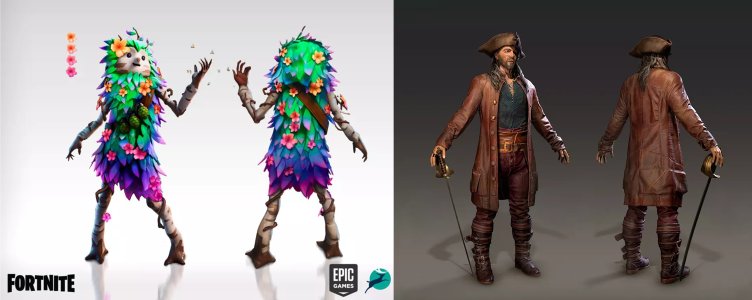
Bushranger for Fortnite by Kevuru Games
For animation or game engine use, 2D characters often require layered PSDs; 3D characters must have clean topology, proper UVs, and rigs. Proper work of game artists will make the work of animators and game developers easier. Assets preparation for integration – it’s not just about how the character looks, but how it works.
Selecting a style of characters is a decision that the client makes together with the artist. The style isn’t just about aesthetics and personal preferences – it also affects production time and cost. A stylized 2D character with flat shading is faster to produce than a highly detailed 3D hero with realistic skin, fabric simulation, and complex textures.
Trends in character art change every year. In 2025, the so-called hybrid style is popular. It blends stylized proportions with realistic materials. Think of semi-realistic eyes with stylized hair, or cartoon-like anatomy paired with fabric that looks physically accurate. This hybrid style gives characters both personality and production value.
Environment art in 2025
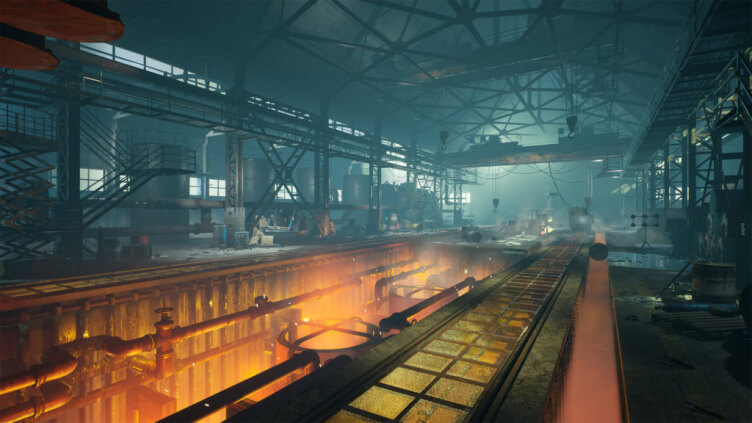
Environment art by Kevuru Games
For a person outside of the game design world, game environment art may look like pictures of interiors or natural landscapes. But there’s a lot of invisible structure and technical thinking behind it – things only experienced environment artists know. That’s why any digital artist without relevant skills can’t “just draw it.”
In 2025, environment art is a blend of design logic, storytelling, and optimization. Artists don’t just create static backgrounds – they build playable spaces with intentional flow, depth, and purpose. They consider things like:
- Player movement and interaction (Where can you go? What draws attention?)
- Modularity (Assets built once, reused efficiently to save time and budget)
- Lighting and atmosphere (For mood, clarity, and emotional impact)
- Engine and performance limits (Especially on mobile or VR)
And while AI can help with generating base ideas or suggesting textures, human environment artists still make the key decisions: how the world guides the player, tells a story, and supports gameplay.
After all, strong environment art is less about making things look “nice” – and more about making the whole game world feel real, functional, and alive.
Visual effects as a component of game art in 2025
Just like environment art, visual effects in games serve a purpose beyond just looking good. VFX are tightly connected to gameplay as they help highlight actions, guide attention, and create emotional response.
Here are some examples of the functions of the effects:
- Indicate timing, danger, and impact
- Build atmosphere – fog, rain, fire, magic
- Support the art style – from realistic sparks to stylized glows
But there’s a challenge: they must be lightweight and efficient. VFX are often built directly in the game engine, combining technical knowledge (like particle systems, shaders, and blending techniques) with creative vision.
In short, VFX in 2025 are a core part of game art – shaping how the game feels to play, not just how it looks. When done well, they’re almost invisible: players instinctively understand that something is powerful, urgent, or magical without needing any explanation.
What are the features of modern 3D game art, and how has it progressed?
When 3D digital game art first appeared in the 90s, it was a revolution. Suddenly, players could move through a world instead of looking at it from one fixed angle.
Yet, the art itself wasn’t much different from 90s 2D art – blocky, pixelated, and full of hard edges. Developers had to squeeze every polygon into strict hardware limits. Characters looked like geometric sculptures, and environments felt empty.
In 2000s, advancements in technology improved the fidelity of game art. Better GPUs allowed for smoother models, richer textures, and experiments with lighting and shadows. Games started to feel more cinematic. Faces showed emotion, landscapes had depth, and water looked like… well, water.
The next step came with physically based rendering (PBR) and advanced shaders. Surfaces reacted to light like in real life – metal gleamed, skin scattered light, and fog shifted as a character walked through it. Game worlds stopped feeling like static backdrops and started breathing.
Games like Senua’s Saga: Hellblade II (2024) showcase how far 3D digital game art has come. Built on Unreal Engine 5, its near‑photorealistic details, dynamic weather systems, and emotional performances deliver cinematic immersion at a level rarely seen before.
Nowadays, real-time ray tracing and AI-assisted asset creation have pushed 3D digital game art into a territory that once seemed impossible. Worlds are vast yet detailed, built faster than ever, and can change on the fly. Players don’t just play in these worlds – they believe in them.
Here are the features of modern 3D Digital Game Art:
- High realism with stylized flexibility. Studios now balance ultra-realistic textures with creative stylization, allowing games to stand out visually without sacrificing believability.
- Physically Based Rendering. PBR workflows simulate real-world lighting and materials, giving models a consistent and lifelike look across environments.
- Procedural asset creation. Tools like Substance 3D Designer and Houdini allow automatic generation of textures, terrains, and props, saving time and producing huge variations of art elements.
- High-poly to low-poly optimization. Artists create detailed high-poly models, then bake details into optimized low-poly meshes for smooth gameplay performance.
What impact does AI have on the various types of game art in 2025?
Some years ago, AI in game art was just a curiosity that didn’t have many practical applications. Some experimenters used it for cleaning up scanned sketches or to fix minor texture issues. Fast forward to 2025, and in every top-tier game art and development company, AI has become an essential tool that changes not only how the artists work but the games themselves.
In 2022, when High on Life artists used Midjourney AI to generate posters to fill in the rooms in the game, they were criticised for using models trained on data that’s collected without consent. Nowadays, using AI is being normalized, as long as it doesn’t use other artists’ work (or doesn’t do it too obviously).
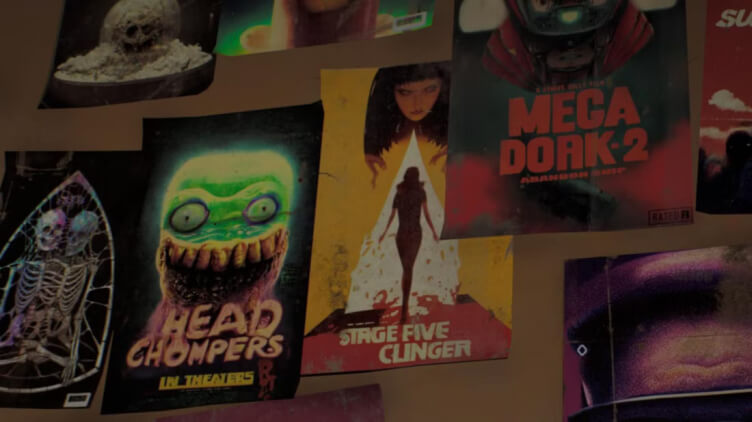
Image source: https://www.thegamer.com/high-on-life-ai-generated-art/
According to the data from Steam, about one in five games released on the platform in 2025 openly uses AI-generated visuals or environments. That’s 7 times more than in 2024. AI tools penetrate all genres and styles of game art.
In concept art and 2D art, AI helps with drafts and moodboards. It allows artists to produce various options at the very start to find the right style together with the client. AI helps to explore various poses and compositions fast, as well as making slight adjustments.
In 3D digital game art, AI helps with texturing, lighting, and even mesh optimization. Studios use tools like Promethean AI or Leonardo AI to instantly populate environments with props and foliage, freeing artists to focus on storytelling.
Procedure‑driven worlds are also trending. For instance, Nightingale uses a card-based system to generate entirely new biomes whenever players use “Realm Cards,” offering nearly limitless variety in procedurally built environments.
While most game artists now use AI in some part of their workflow, its impact isn’t always obvious. In some cases, however, it’s well documented. Lokum Games, a European mobile studio, used AI tool Layer used the AI tool Layer to create illustrations for Tactical Strike, saving 2,800 hours of production time while maintaining consistent asset quality.
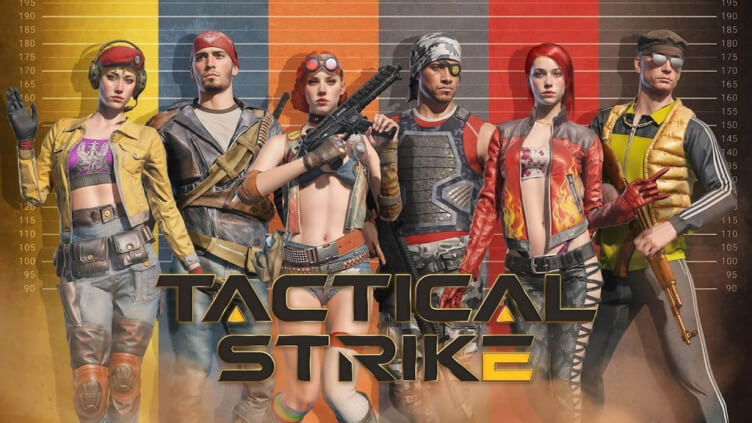
Image source: https://www.layer.ai/case-study/lokum-games
For game design services, AI means richer worlds and faster turnaround. It’s not about replacing the artist; it’s about letting them do more – experiment more, polish more, and focus on the creative part of the work.
Conclusions on the Future of Game Art and Development
Predictions about the future of video games are not very reliable in our fast-paced world. Yet, there are things that can be seen already from the trends that are happening right now.
There’s no doubt about the prominent role of AI in game art. The question is, what kind of tasks will it take over? And what will humans do with the time they have left?
From what we see today, AI is taking over repetitive and technical work – cleaning up scans, generating texture variations, building placeholder assets, or rapidly testing different video game art styles. This frees artists to focus on the parts that machines can’t truly master: storytelling, emotional resonance, and unique creative vision.
In the near future, game art and development services will likely become even more hybrid. The best game dev companies will pair AI-powered speed with human-led artistry, creating worlds that feel handcrafted even when part of the process is automated. Artists may become more like directors – guiding AI tools, curating outputs, and ensuring everything fits the creative vision.
What won’t change is the need for originality. Players remember the art style that made them feel something —–not the tool used to create it. And in a market that moves fast, the studios that can balance technology with strong, distinctive visuals will lead the way.
If you want to see how we combine both worlds in practice, take a look at our portfolio.